Episode 1

The Sailor Who Heard the Map

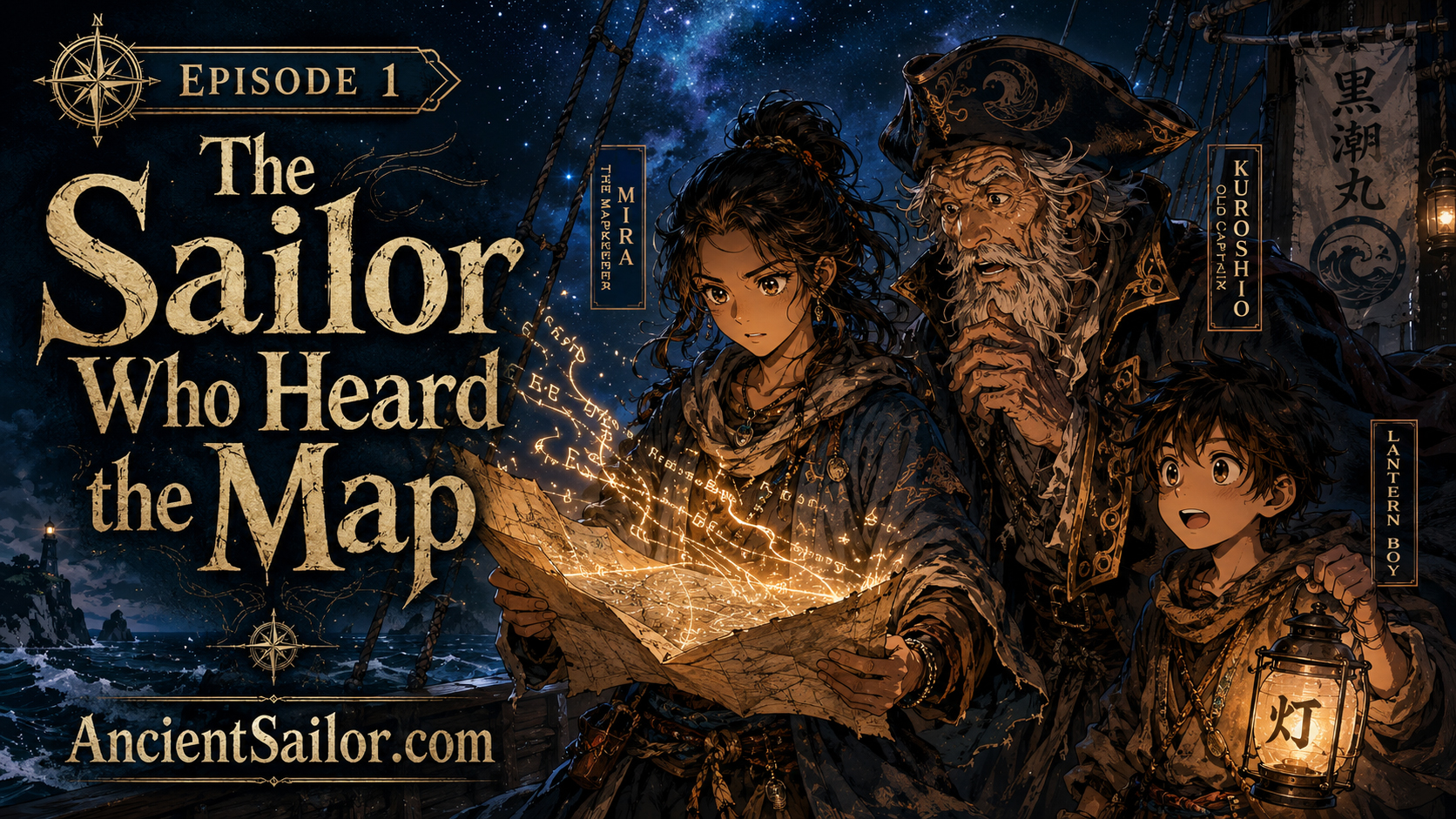
Mira the Mapkeeper opens an old sea chart and hears a whisper from the paper. Captain Kuroshio says this is normal. The map immediately calls him a liar. The Permit Goblin demands that all supernatural cartographic events be reported in triplicate before departure.

Mira the Mapkeeper holding a glowing ancient map while Captain Kuroshio and Lantern Boy look on in a moonlit harbor archive
Opening harbor

The old chart had stains, teeth marks, and opinions.

It was found under a locked table in the harbor archive, wrapped in sailcloth, tied with black rope, and labeled: Do Not Give This to Captain Kuroshio.

Naturally, Captain Kuroshio had already signed for it, spilled tea on it, and told three different dock workers that he had discovered it heroically during a duel with a fog bank.

Episode setup

The map is not a prop. It is a witness.

Episode 1 establishes the central rule of AncientSailor.com: the sea remembers what sailors edit out. The map does not merely show a route. It records the difference between what happened and what the captain later claimed happened.

  • Mira listens before she believes.
  • Kuroshio edits before he remembers.
  • The Permit Goblin stamps before he understands.
  • Lantern Boy asks the useful question.
  • The map whispers only when someone deserves it.
Manga episode

Scene by scene.

A sea map wakes up, a captain revises history, and Mira realizes the voyage may be dangerous before the ship even leaves the dock.

The whispering map glows in the harbor archive as the AncientSailor crew gathers around it
Panel 1

The Harbor Archive

Mira stood in the deepest room of the harbor archive, where old charts slept in cedar drawers and the air smelled of dust, salt, and warnings nobody had respected.

Lantern Boy held up the lamp.

“Why is this drawer chained shut?” he asked.

Mira read the tag aloud: “Because sailors keep mistaking curiosity for destiny.”

Panel 2

The Captain Arrives

The door burst open. Old Captain Kuroshio entered with the confidence of a man who had survived many storms and learned the wrong lessons from all of them.

“Excellent,” he said. “You found my map.”

Mira looked at the chain. “This map was locked away before you were born.”

“I have always been advanced for my age.”

Panel 3

The Map Speaks

Mira untied the black rope. The chart unfolded itself across the table. Coastlines appeared in ink. Islands surfaced like memories. A red route curved into open water and stopped beside a black circle marked only: Do Not Brag Here.

Then the map whispered.

“He is lying.”

Lantern Boy dropped the lamp. Captain Kuroshio caught it with one hand and pretended he had meant for that to happen.

Panel 4

Normal Map Behavior, Apparently

“Talking maps are common,” Captain Kuroshio said. “Very common. Practically boring.”

The map rustled.

“He once tried to navigate by soup steam.”

Mira slowly turned toward the captain.

“It was a very directional soup,” he said.

Panel 5

The Permit Goblin Objects

A tiny green hand slapped a stamp onto the table.

UNAUTHORIZED SUPERNATURAL NAVIGATION DEVICE.

The Permit Goblin of the Port climbed onto a ledger, adjusted his spectacles, and pointed at the chart.

“All speaking maps must be registered, inspected, and emotionally classified before use.”

The map whispered, “Bureaucrat.”

The goblin gasped. “Hostile classification confirmed.”

Panel 6

Mira Reads the Route

Mira ignored the captain, the goblin, the offended chart, and Lantern Boy, who was now apologizing to the lamp.

She studied the route. The ink shifted under her fingers. The coastline was familiar. The harbor was familiar. The first island was familiar.

The last mark was not.

“There is no island there,” she said.

The map whispered, “Not anymore.”

Panel 7

The Captain Revises History

Captain Kuroshio leaned over the chart.

“Ah. That island. I once sailed past it during a heroic expedition in which I rescued twelve merchants, defeated a whirlpool, and taught a dolphin poetry.”

The map curled at the edges.

“He was lost. The merchants rescued him. The dolphin left.”

Mira took out her notebook.

“This map may be the most reliable witness in the harbor.”

Panel 8

The Sea Remembers

A cold wind slipped through the archive, though every window was closed. The ink darkened. A line appeared beneath the vanished island:

The sea remembers what sailors edit out.

Nobody spoke.

Even the Permit Goblin lowered his stamp.

Far outside, beyond the harbor wall, something large moved under the moonlit water.
Episode turn

The route is not a route. It is a confession.

Mira realizes the chart is not simply showing where sailors went. It is showing what they refused to admit happened there.

Captain Kuroshio wants to depart at dawn. The Permit Goblin refuses to approve the voyage without a truth declaration. Lantern Boy asks whether the map can also identify safe snack locations. The map remains silent, which everyone agrees is ominous.

Character beats

What this episode establishes.

Episode 1 sets the rules for the world: maps remember, sailors exaggerate, and the sea dislikes edited testimony.

Mira

The Mapkeeper

Mira is precise, skeptical, and willing to listen before she believes. She is not afraid of strange things. She is afraid of bad records, bad captains, and bad routes pretending to be destiny.

Kuroshio

The Old Captain

Captain Kuroshio knows the sea deeply, but he edits his own past like a man trimming sails in a storm. He is brave, experienced, dramatic, and not legally reliable.

The Map

The Witness

The chart is more than an object. It is memory in paper form. It does not explain everything, but it refuses to let lies pass unmarked.

Goblin

The Port Official

The Permit Goblin is ridiculous, but not useless. Harbors survive because someone counts cargo, records departures, and asks why a map is whispering at taxpayers.

Lantern Boy

The Practical Witness

Lantern Boy is young, honest, and focused on the details adults ignore: dropped lamps, strange winds, snack shortages, and whether anyone has checked the boat for holes.

The Sea

The Memory Below

The ocean is not treated as empty space. It is presence, pressure, witness, danger, and memory. It does not speak often. It does not need to.

Sea lesson

Maps are not neutral in this harbor.

In real maritime history, maps, charts, route memories, and harbor records were practical tools. They shaped where people sailed, what they feared, what they traded, and what they remembered.

In this story world, the map becomes a character because every route is more than geography. It is a record of decisions, dangers, omissions, and the version of events sailors hoped would survive.

AncientSailor rule

Never trust a route that refuses to explain itself.

If the chart changes, the captain sweats, and the harbor official starts stamping things in panic, the voyage may require further review.

  • Maps show memory, not just distance.
  • Routes carry warnings from earlier sailors.
  • Bad records create real danger.
  • Every captain has a favorite version.
  • The sea keeps the original.
Next episode

The storm is already listening.

At dawn, the ship leaves the harbor with a whispering chart, an irritated goblin seal, and a captain who insists the weather “respects him personally.”

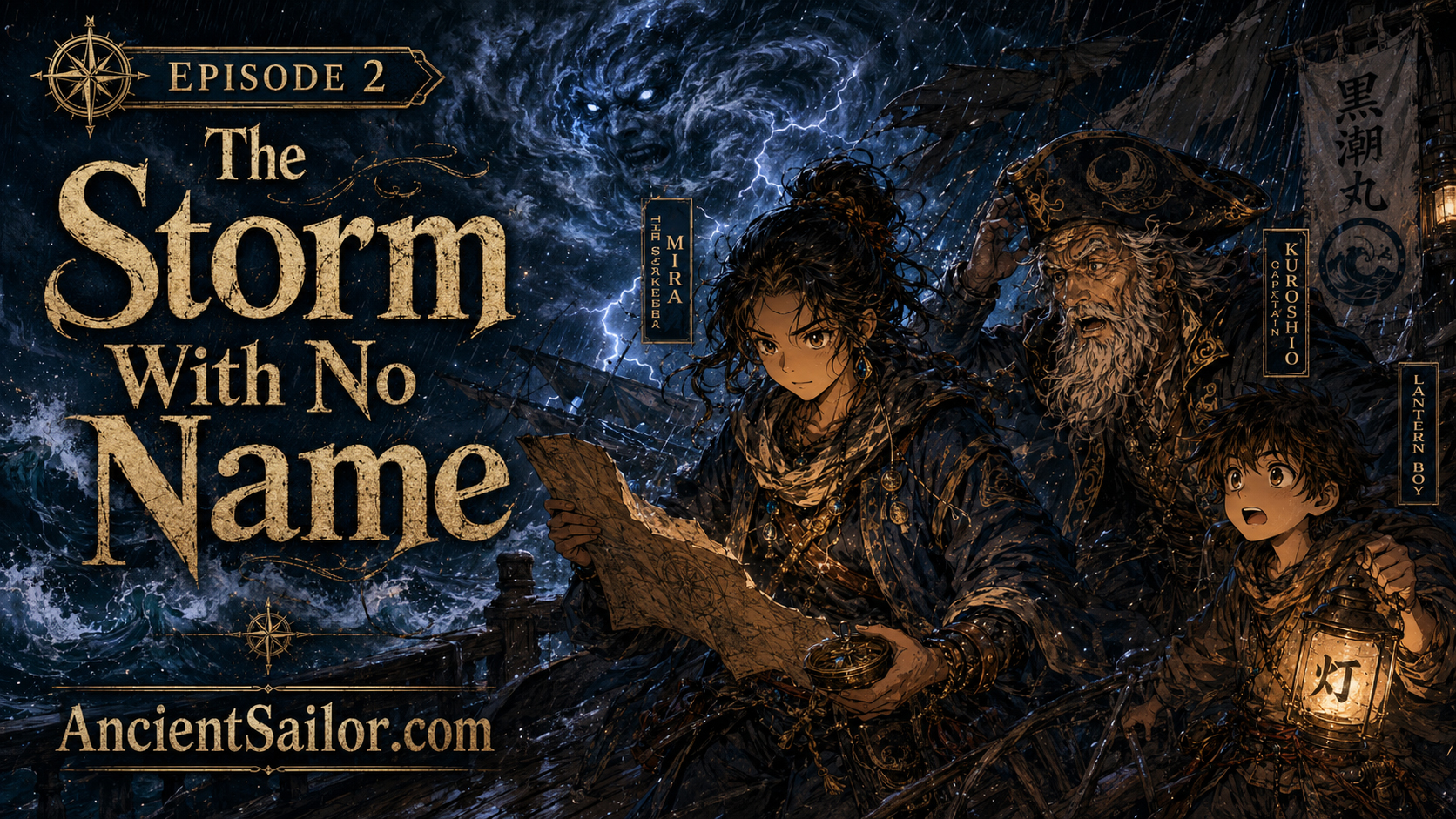
AncientSailor crew facing a nameless storm with lightning and rough seas
2
Next

The Storm With No Name

A storm appears without warning and begins criticizing the ship’s maintenance record.

Read Episode 2
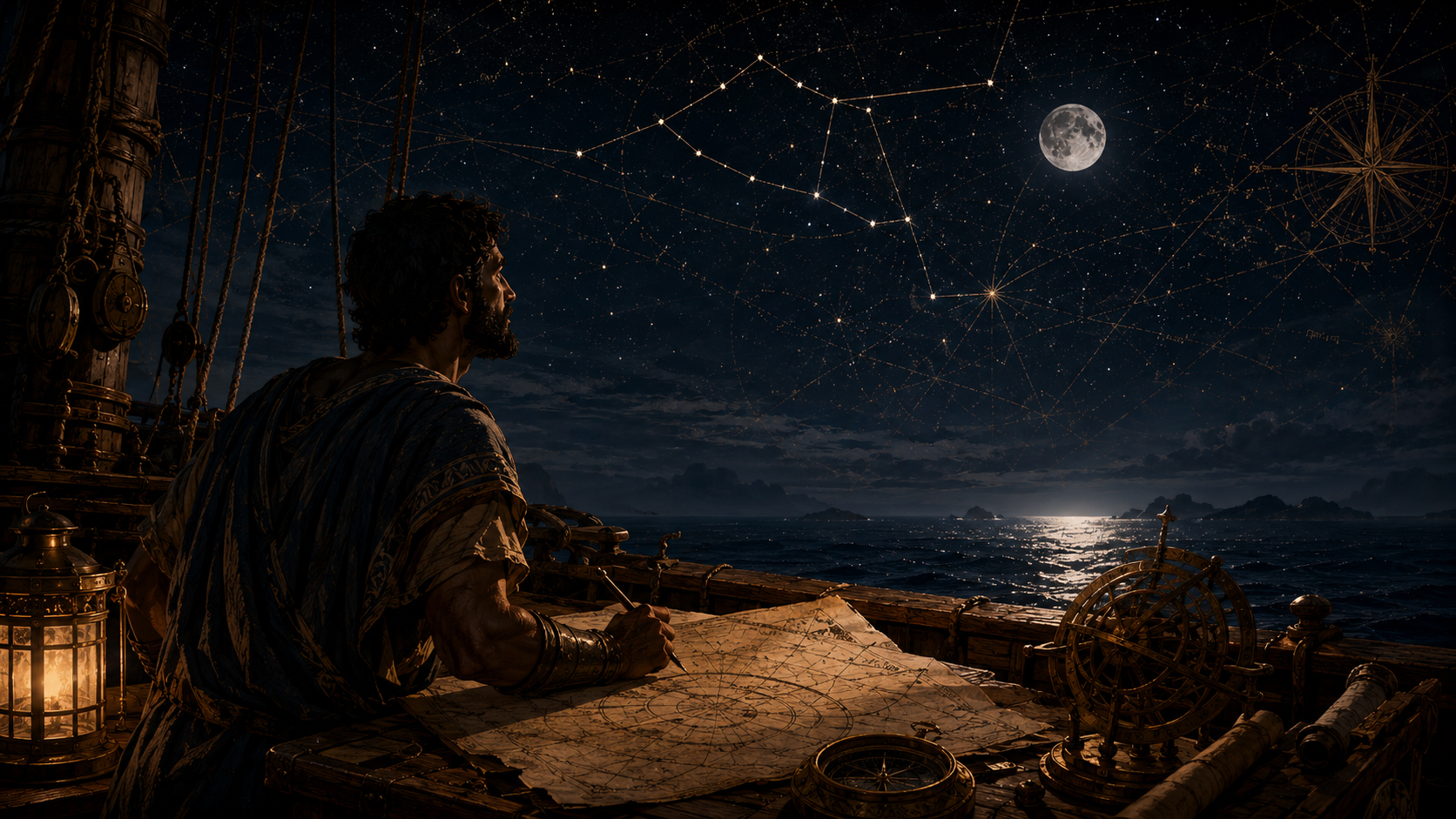
Ancient navigator reading stars from a ship deck at night
Guide

How Sailors Navigated

Learn the real-world navigation ideas behind stars, winds, waves, birds, coastlines, and route memory.

Read the guide
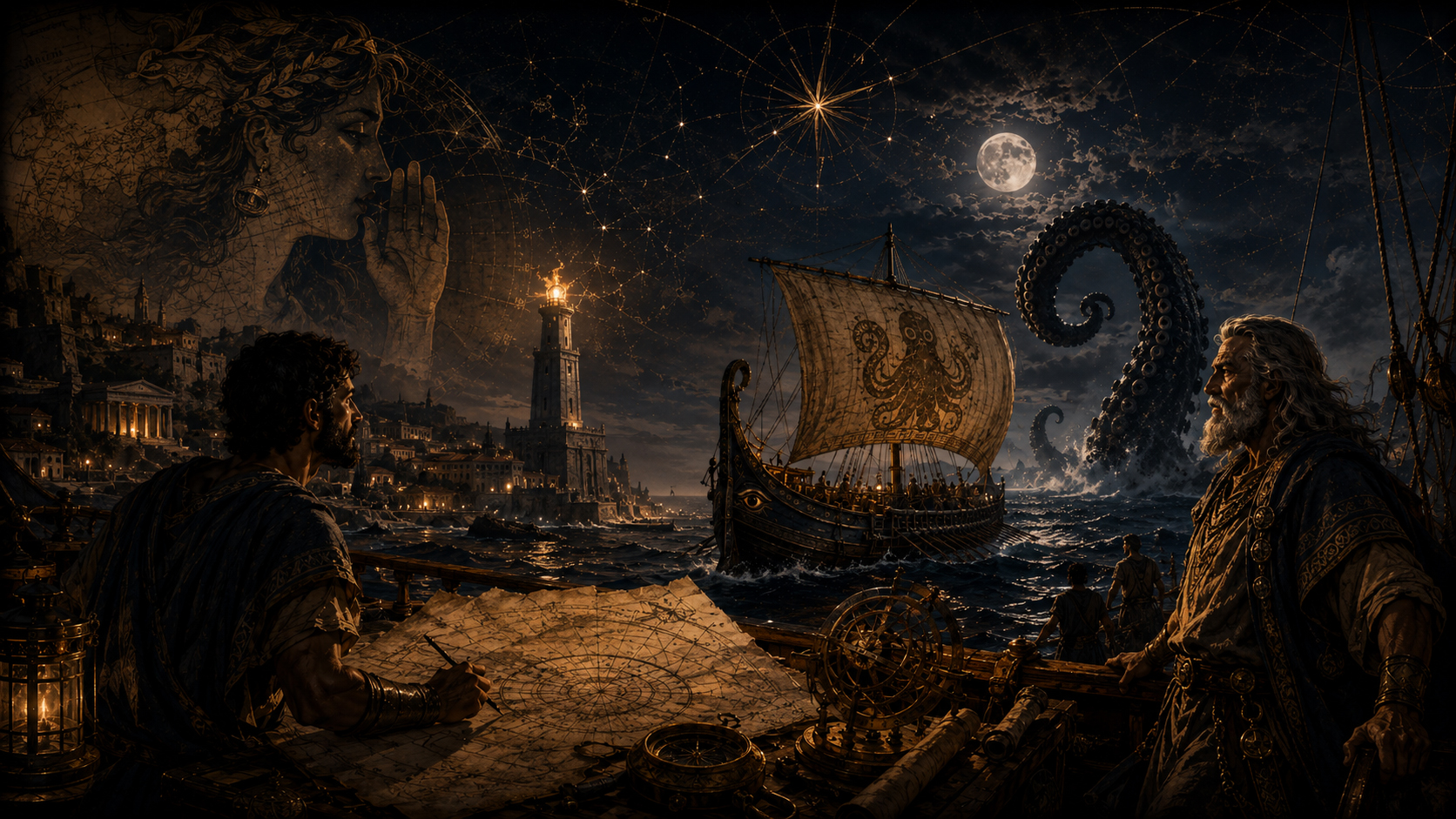
AncientSailor manga crew gathered by ship, lantern, map, moon, and sea monsters
All episodes

Manga Episodes

Return to the full episode list for maps, storms, krakens, lighthouses, sea judges, and the last star before morning.

View all episodes
Reading note

Fictional story. Real maritime flavor.

This episode is a fictional manga-style sea adventure inspired by maritime history, sailor folklore, route memory, navigation traditions, maps, and harbor culture. It is not navigation instruction, boating safety advice, historical documentation, survival training, or a substitute for modern charts, weather forecasting, emergency equipment, licensed instruction, or professional seamanship.