FAQ

Questions from the harbor.

AncientSailor.com is part sea history, part folklore guide, part manga adventure, and part warning against giving Captain Kuroshio a public speaking platform near witnesses. Here are the common questions before departure.

AncientSailor FAQ scene with old maps, lanterns, harbor questions, and nautical documents
Start here

Is this history, myth, comedy, or manga?

Yes. The site uses clear educational pages and fictional manga-style episodes to explore ancient maritime ideas without making the subject feel like a dry museum placard trapped in a storm.

The real subjects are ancient ships, navigation, storms, ports, lost voyages, sea myths, and the human habit of turning danger into story.

Harbor rule

AncientSailor.com is not a manual. It is a lantern.

The goal is to make ancient maritime ideas memorable: how sailors read the world, why ships mattered, why ports were powerful, why myths survived, why storms became warnings, and why a corrected story can be more valuable than a heroic one.

  • Useful history, not dry history.
  • Fictional episodes, real sea lessons.
  • Myths treated as folklore and story.
  • Strong disclaimers around navigation and safety.
  • Kraken-sama treated with appropriate courtesy.
General questions

About the site.

Basic harbor orientation before the map starts whispering.

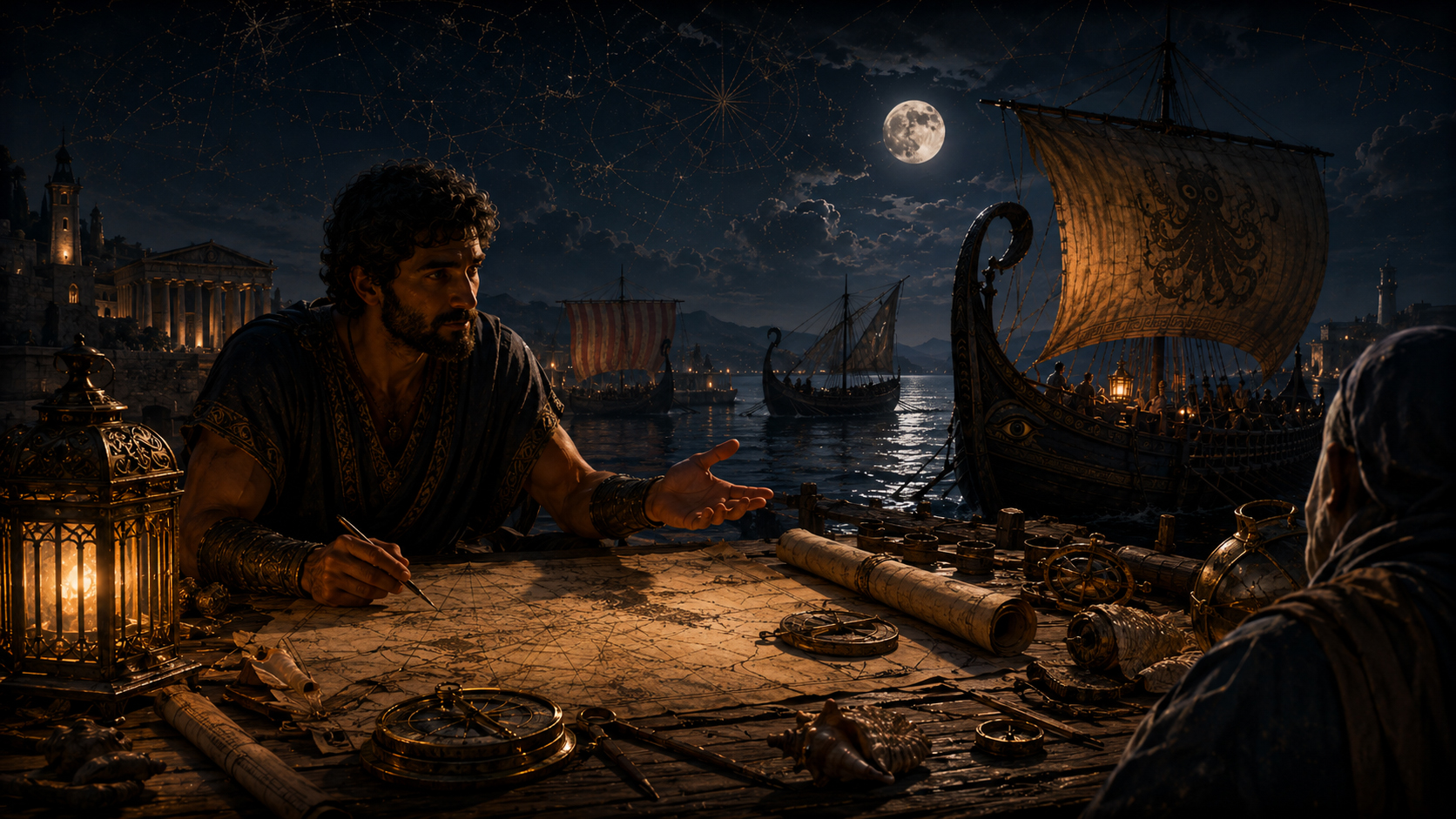
Harbor archive desk with old nautical papers, maps, lanterns, and FAQ questions
Question

What is AncientSailor.com?

AncientSailor.com is a mythic, manga-style sea chronicle about ancient sailors, old ships, lost voyages, sea monsters, storms, ancient ports, and navigation before GPS.

It is built to be readable, atmospheric, educational, funny when useful, and visually dramatic without sacrificing clarity.

Question

Is this a serious history site?

It is serious about being useful, but not solemn about presentation. The informational pages explain real maritime concepts in plain language. The manga episodes are fictional adventures inspired by those concepts.

Question

Is the manga fictional?

Yes. Mira the Mapkeeper, Old Captain Kuroshio, Kraken-sama, Lantern Boy, the Permit Goblin, the whispering map, and the Sea Judge are fictional.

The stories are inspired by maritime history, sailor folklore, ancient navigation, ship culture, storms, and port life.

Navigation and ships

Before GPS, engines, and weather apps.

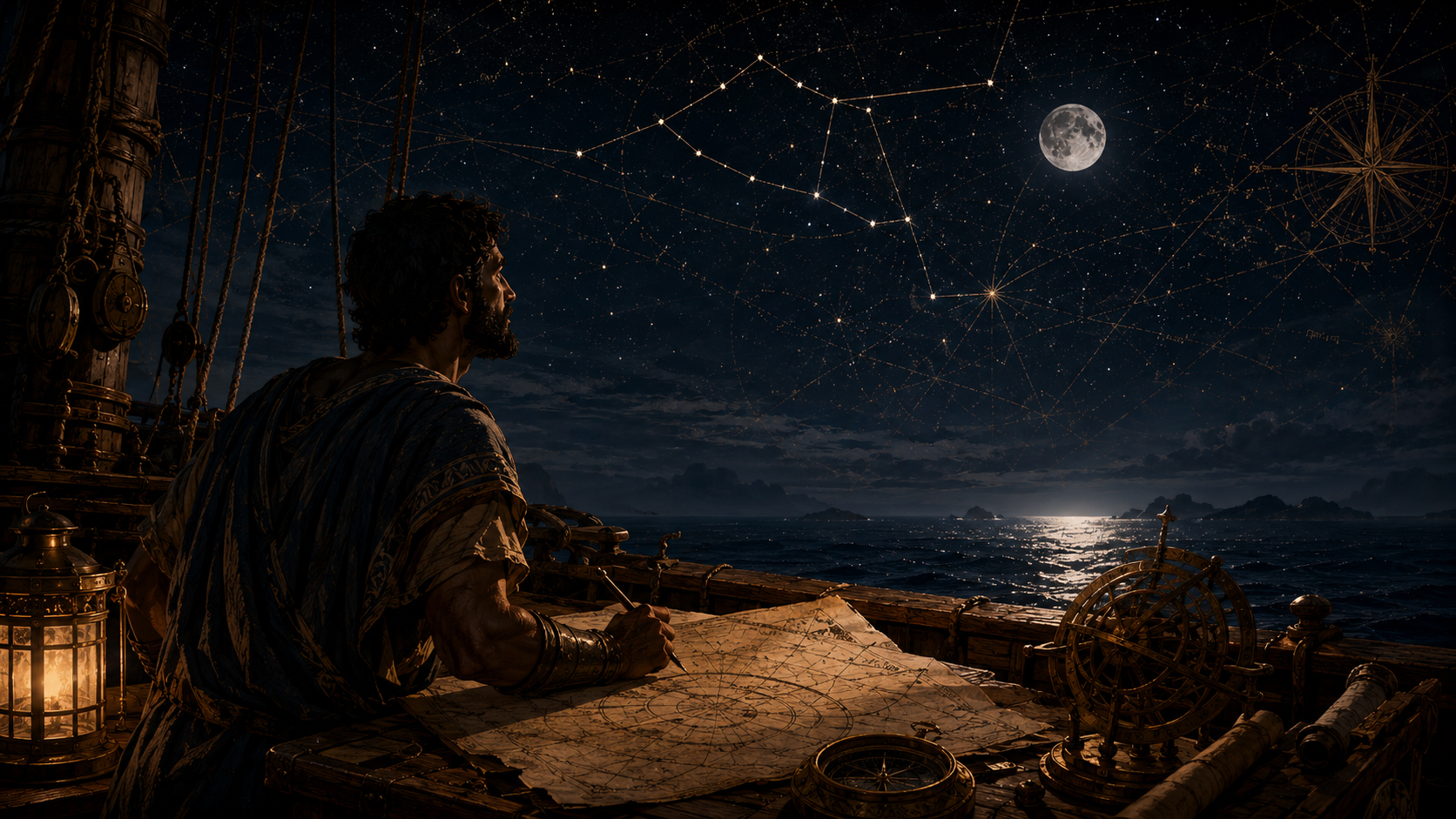
Ancient sailors did not have satellites. They had stars, memory, experience, and a strong reason not to be wrong.

Ancient navigator reading stars from a ship deck
Question

How did ancient sailors navigate?

Ancient sailors used many clues together: stars, sun, moon, wind, swells, currents, birds, clouds, coastlines, water color, depth, seasonal patterns, and route memory.

The key idea is layered attention. One sign could mislead. Several signs could confirm or correct each other.

Read the navigation guide
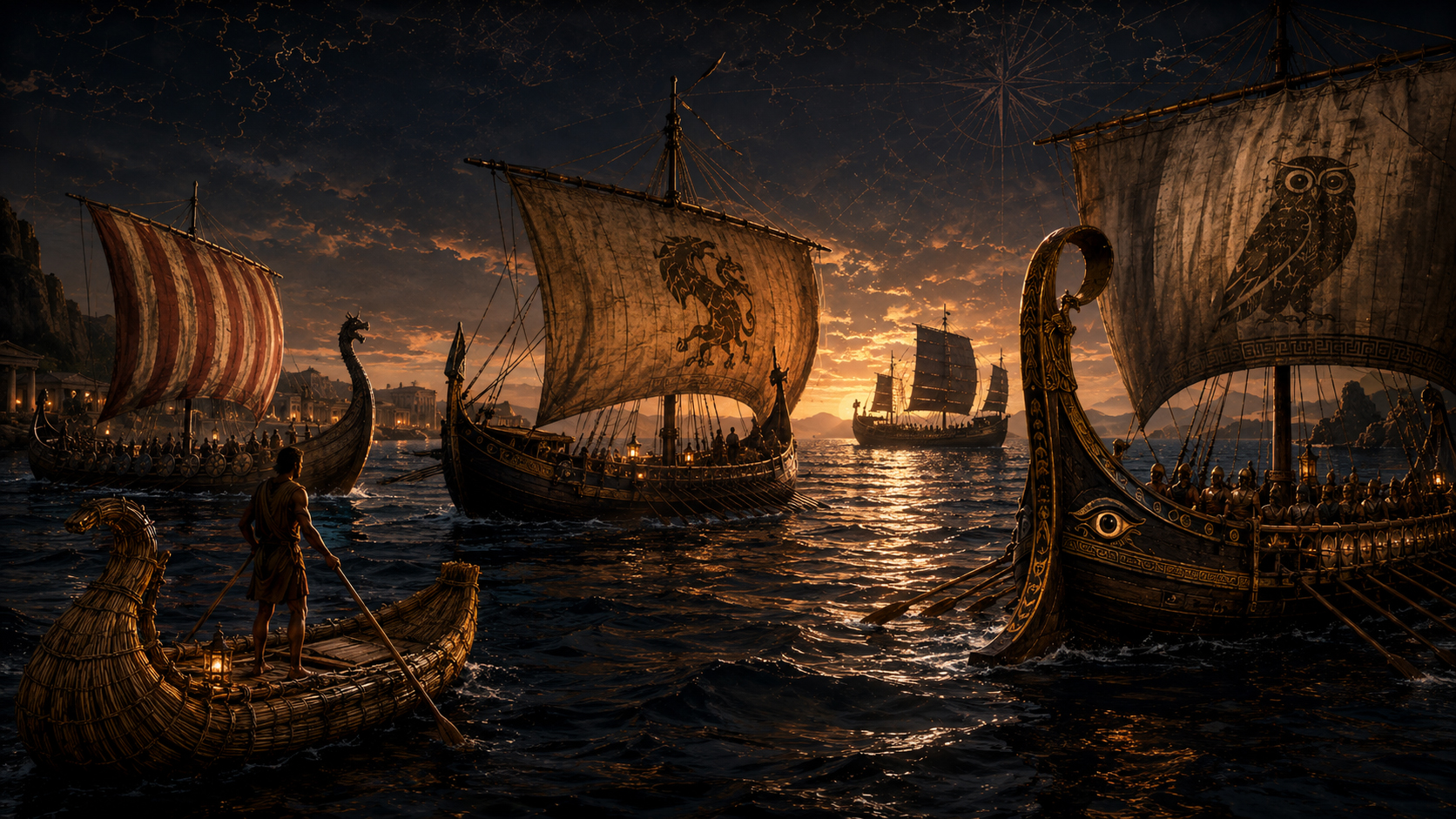
Ancient ships crossing dark water under bronze light
Question

What kinds of ancient ships does the site cover?

The site discusses reed boats, Nile boats, Phoenician traders, Greek triremes, Roman merchant ships, Viking longships, dhows, Chinese junks, Pacific voyaging canoes, and other ancient or traditional maritime vessels.

Explore ancient ships
Question

Were ancient sailors reckless?

Some were. Some were careful. Most had to balance weather, cargo, politics, trade pressure, crew condition, and ship limits. Ancient sailing required judgment, maintenance, local knowledge, and humility.

Captain Kuroshio represents the less humble end of the spectrum.

Question

Is celestial navigation just following stars?

No. Stars were important, but skilled navigation also used wind, swell, currents, season, coastlines, birds, clouds, depth, memory, and experience. A star could guide, but it did not do all the thinking.
Myths and monsters

Why the sea grew teeth.

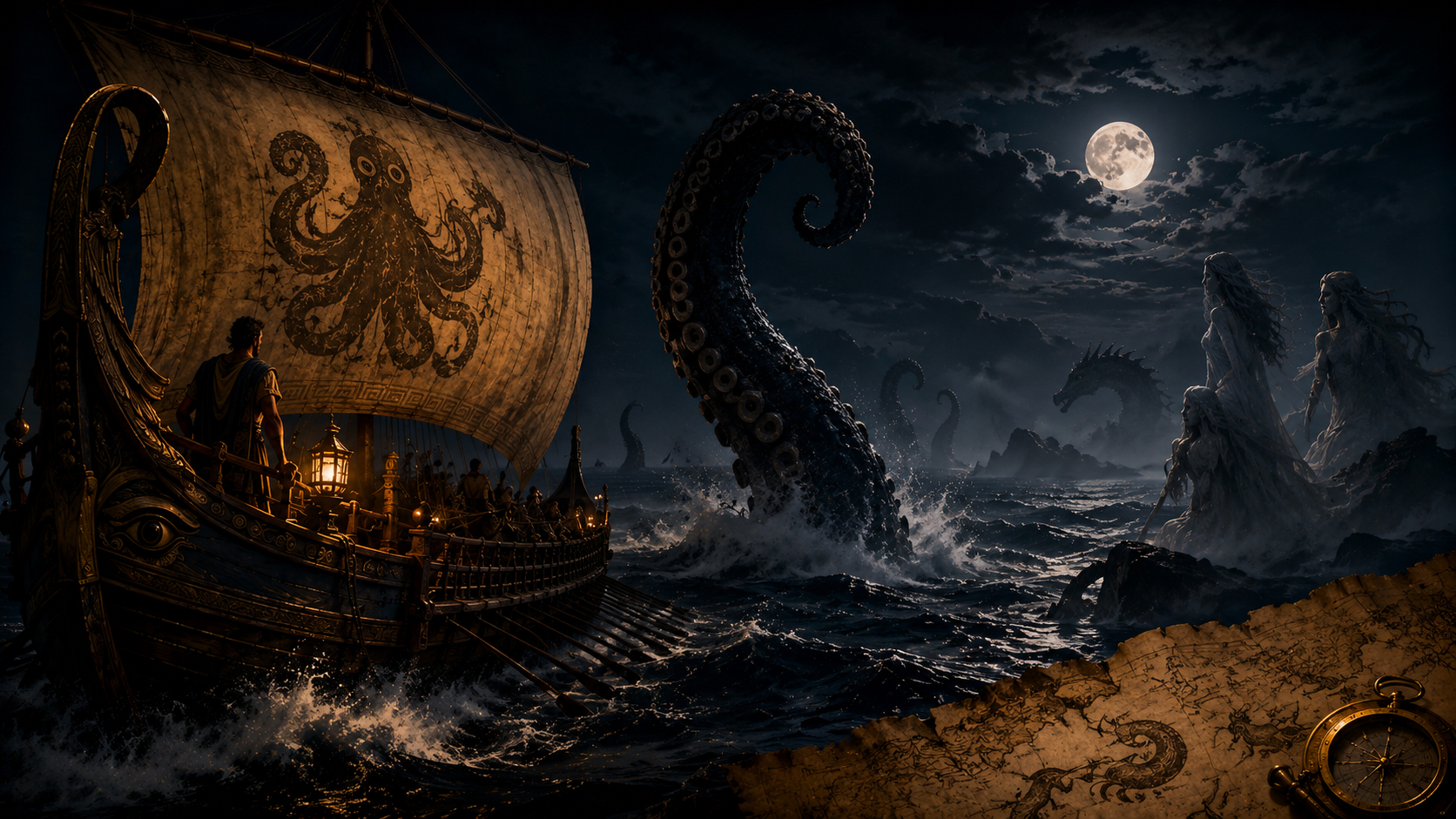
Sea myths often stored fear, warning, mystery, entertainment, and practical caution inside memorable stories.

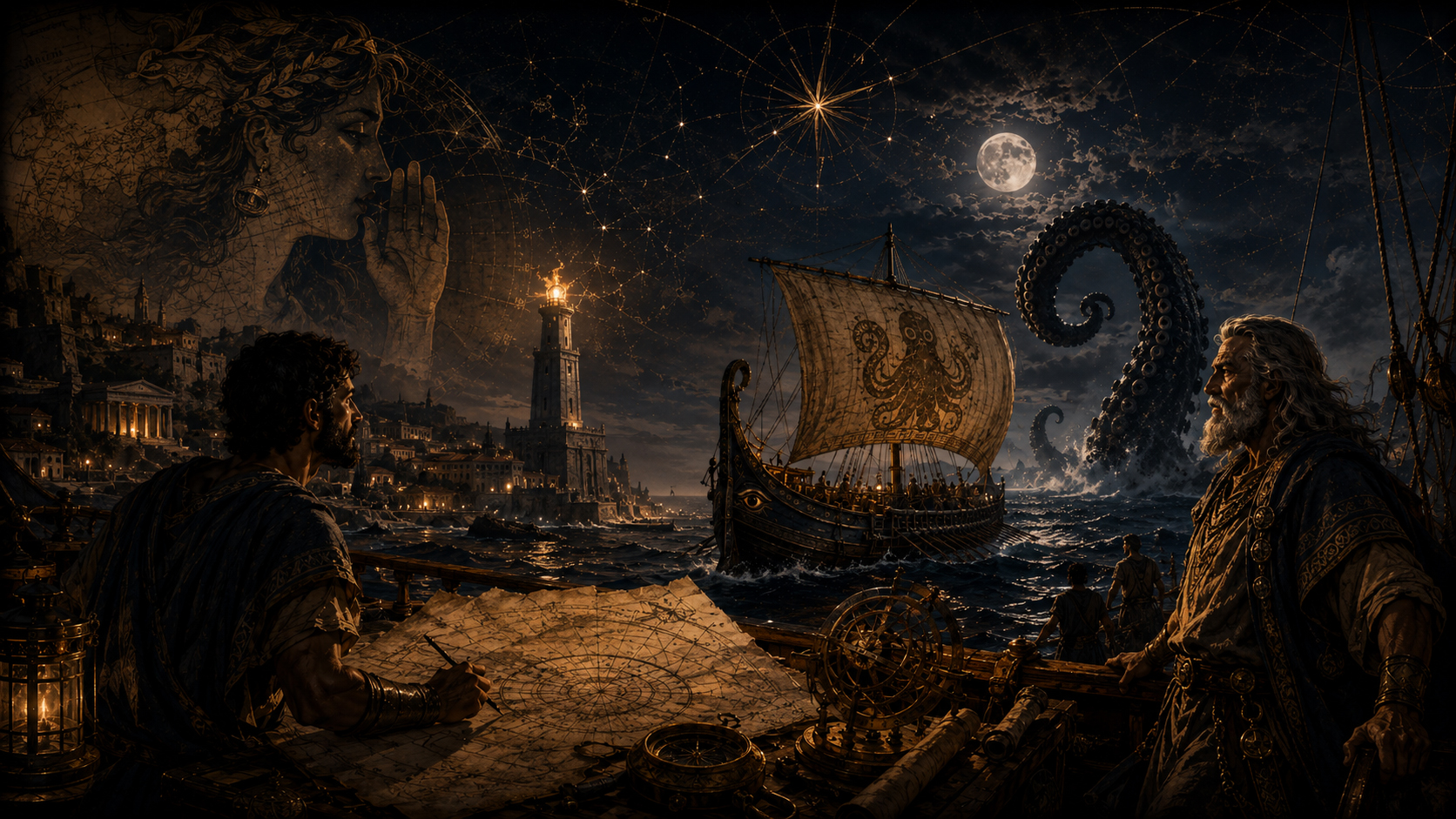
Kraken and mythic sea monsters around an ancient ship
Question

Are sea monsters presented as real animals?

No. AncientSailor.com treats sea monsters as folklore, symbolism, sailor psychology, story, and cultural memory. Some legends may have been influenced by real animals or real hazards, but the site does not present monsters as a scientific catalog.

Explore sea myths
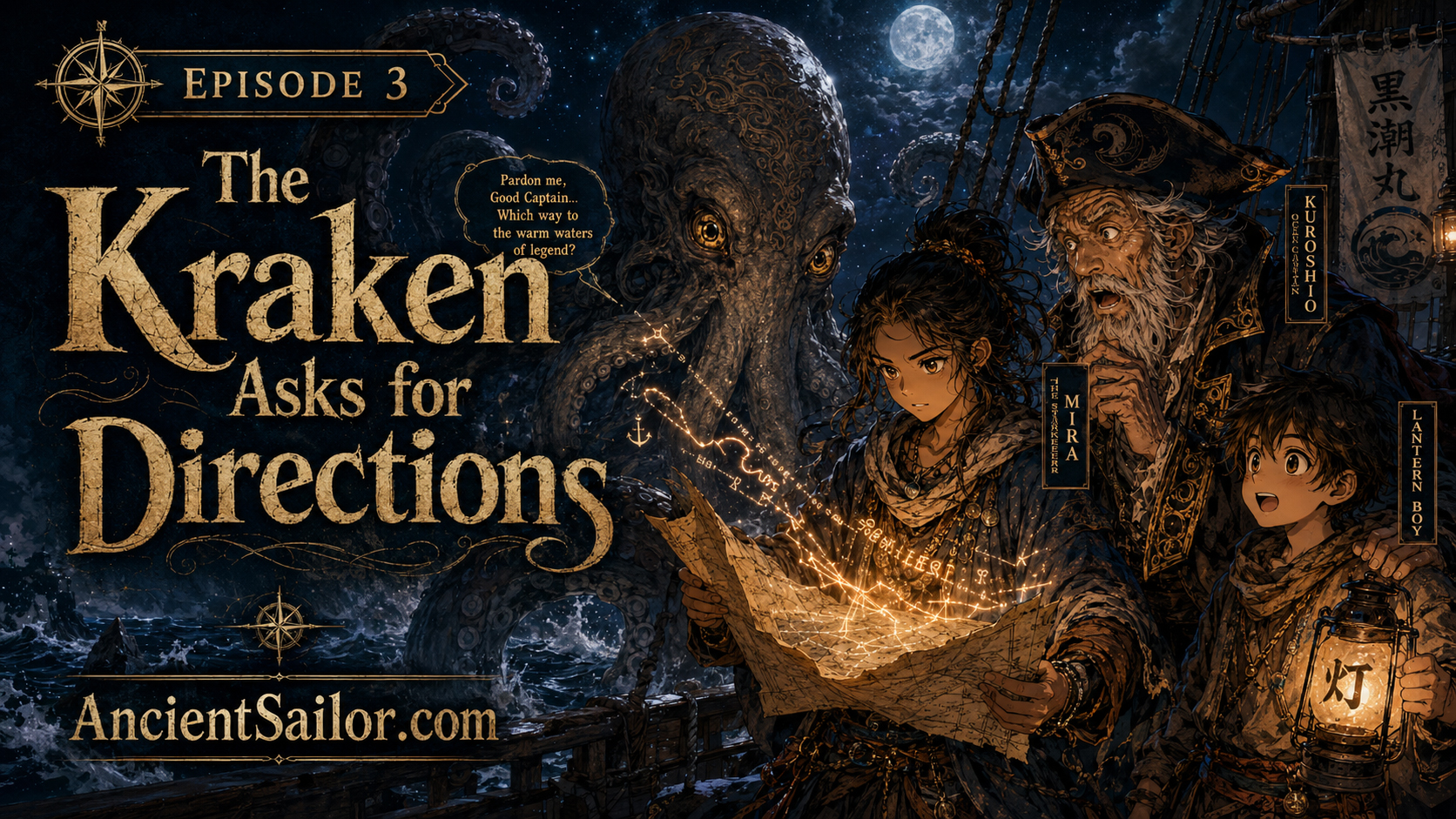
Polite Kraken-sama asking for directions beside an ancient ship
Question

Why is Kraken-sama polite?

Because it is funnier, stranger, and more useful than making him merely hungry. Kraken-sama represents the idea that the sea is not empty space. It has currents, residents, hazards, memory, and places sailors should label correctly.

Question

What do sea myths teach?

Sea myths can warn about reefs, currents, storms, fog, hunger, arrogance, dangerous coastlines, strange animals, and the unknown. They can also explain fear, entertain crews, and preserve warnings in a form people remember.

Question

What is the false lighthouse?

In the manga, the false lighthouse is a dangerous signal that looks helpful but leads toward rocks. It represents the risk of trusting one attractive clue while ignoring depth, current, waves, birds, smell, sound, and the map.

Read Episode 4
Harbor answer

The site rule: the sea remembers what sailors edit out.

That line is the spine of AncientSailor.com. A useful sea story is not just dramatic. It preserves the warning accurately enough to help the next crew.

The map, Mira, the Sea Judge, and even the Permit Goblin all serve the same idea: records matter, labels matter, and heroic retellings become dangerous when they erase what actually kept the ship alive.

Episodes and characters

The manga voyage.

Six episodes, one crew, one difficult map, many corrected stories.

Question

Who is Mira the Mapkeeper?

Mira is the practical navigator of the story. She reads maps, stars, swells, currents, weather, depth, and evidence. She is skeptical without being closed-minded, which makes her the only safe person near the helm.

Question

Who is Captain Kuroshio?

Old Captain Kuroshio is experienced, brave, theatrical, and dangerously fond of improving stories after the fact. He knows the sea, but he also enjoys pretending the sea respects him personally.

Question

Why is there a Permit Goblin?

Because every great voyage eventually meets paperwork. The Permit Goblin is a joke about bureaucracy, but he also represents records, inspections, port rules, cargo declarations, and the unglamorous systems that make harbors work.

Question

What does the Sea Judge do?

The Sea Judge appears when sailors exaggerate too loudly. He corrects stories before they become bad public memory. His court exists because harbor stories can become future navigation warnings.

Question

Is Lantern Boy comic relief?

Partly, but he is also the honest witness. Lantern Boy notices practical details: loose gear, snack shortages, strange smells, dropped lamps, and whether adults are avoiding the obvious question.

Safety and accuracy

Important notes before departure.

This site is storytelling and education, not operational guidance.

Question

Can I use this site to navigate a boat?

No. Do not use AncientSailor.com as navigation instruction, boating safety guidance, emergency guidance, survival training, weather planning, route planning, or vessel operation advice.

Use modern charts, official forecasts, proper equipment, licensed instruction, emergency services, and professional seamanship.

Question

Are the educational pages simplified?

Yes. The site explains broad ideas in accessible language. Ancient maritime history is complex, regional, and full of debate. These pages are introductions, not academic monographs, vessel plans, or technical manuals.

Question

Why so many disclaimers?

Because the site discusses ships, storms, navigation, survival, and the sea. The pages are not instructions. The disclaimers keep the site clearly in the category of education, fiction, folklore, and entertainment.

Question

Can educators or parents use the site?

Yes, as a reading and discussion resource. The tone is adventurous and comic, but the subject matter includes danger, storms, shipwrecks, myths, and maritime risk. Adults should decide what is appropriate for their readers.

Popular routes

Choose the next page.

Follow the map, but verify the lighthouse.

AncientSailor manga crew gathered with ship, map, lantern, and moon
Start

Manga Episodes

Read the full six-part AncientSailor.com manga voyage in order.

View episodes
Ancient ships crossing dark water under bronze light
Guide

Ancient Ships

Explore old vessels, trading ships, warships, river craft, and ocean canoes.

Board the ships
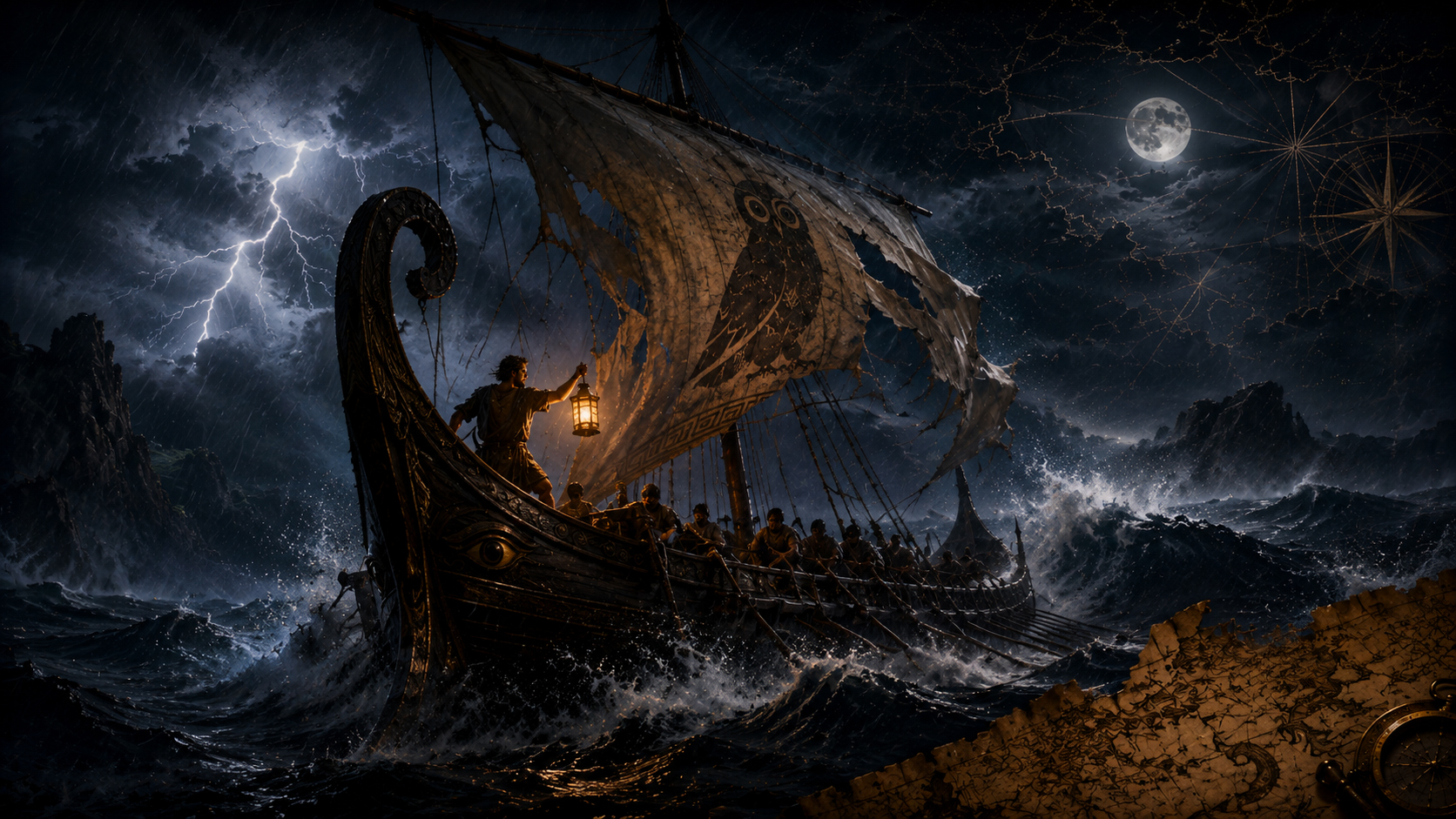
Ancient sailing ship facing storm waves and lightning
Guide

Storms and Survival

Learn why storms punished poor timing, bad maintenance, weak judgment, and overconfident captains.

Face the storm
Final harbor note

AncientSailor.com is not a manual. It is a lantern.

The goal is to make ancient maritime ideas memorable: how sailors read the world, why ships mattered, why ports were powerful, why myths survived, why storms became warnings, and why a corrected story can be more valuable than a heroic one.