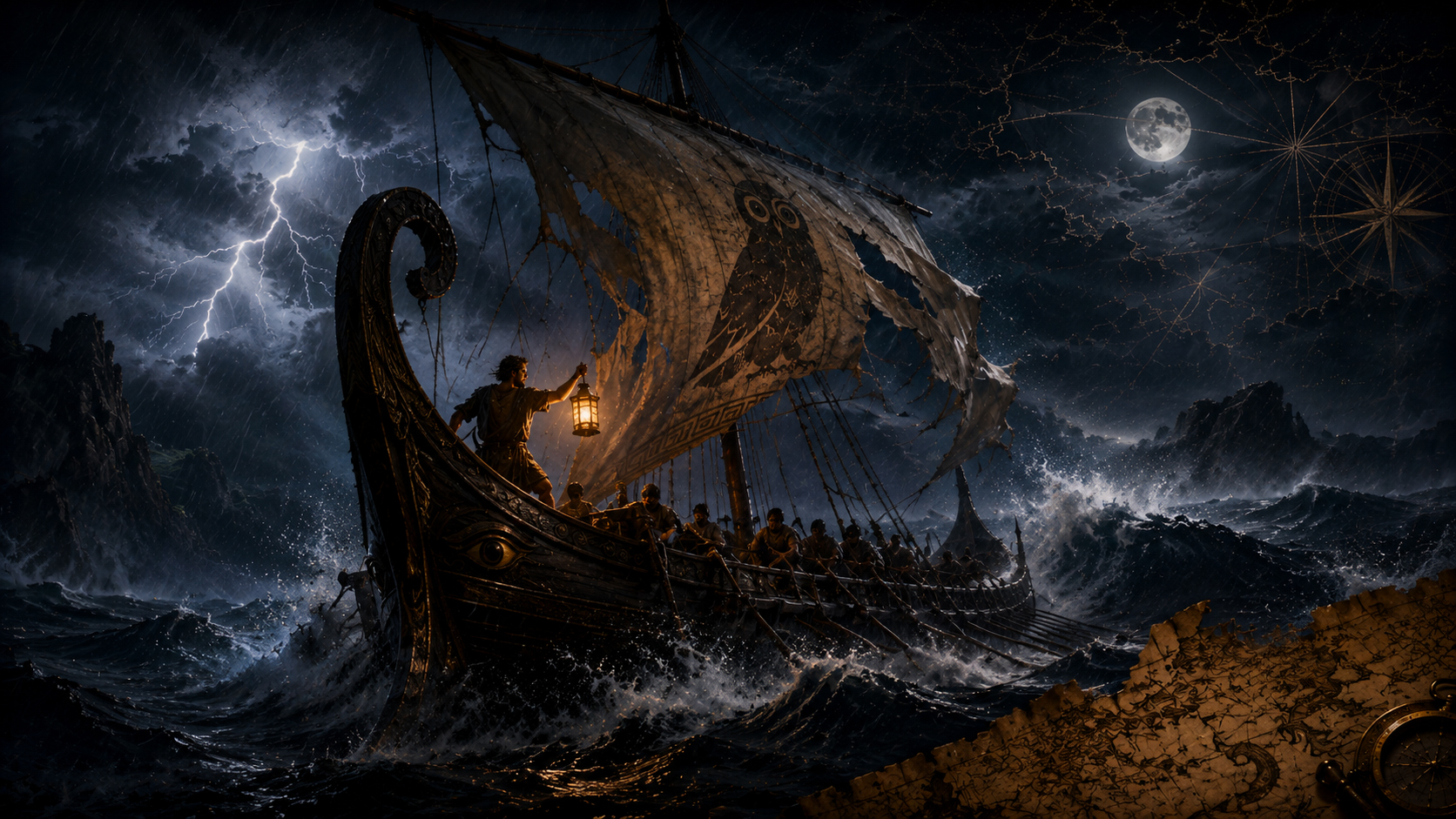
Navigation methods
How sailors found their way.
No single method was perfect. Good sailors layered clues together until
the route became less mysterious and slightly less insulting.
Stars
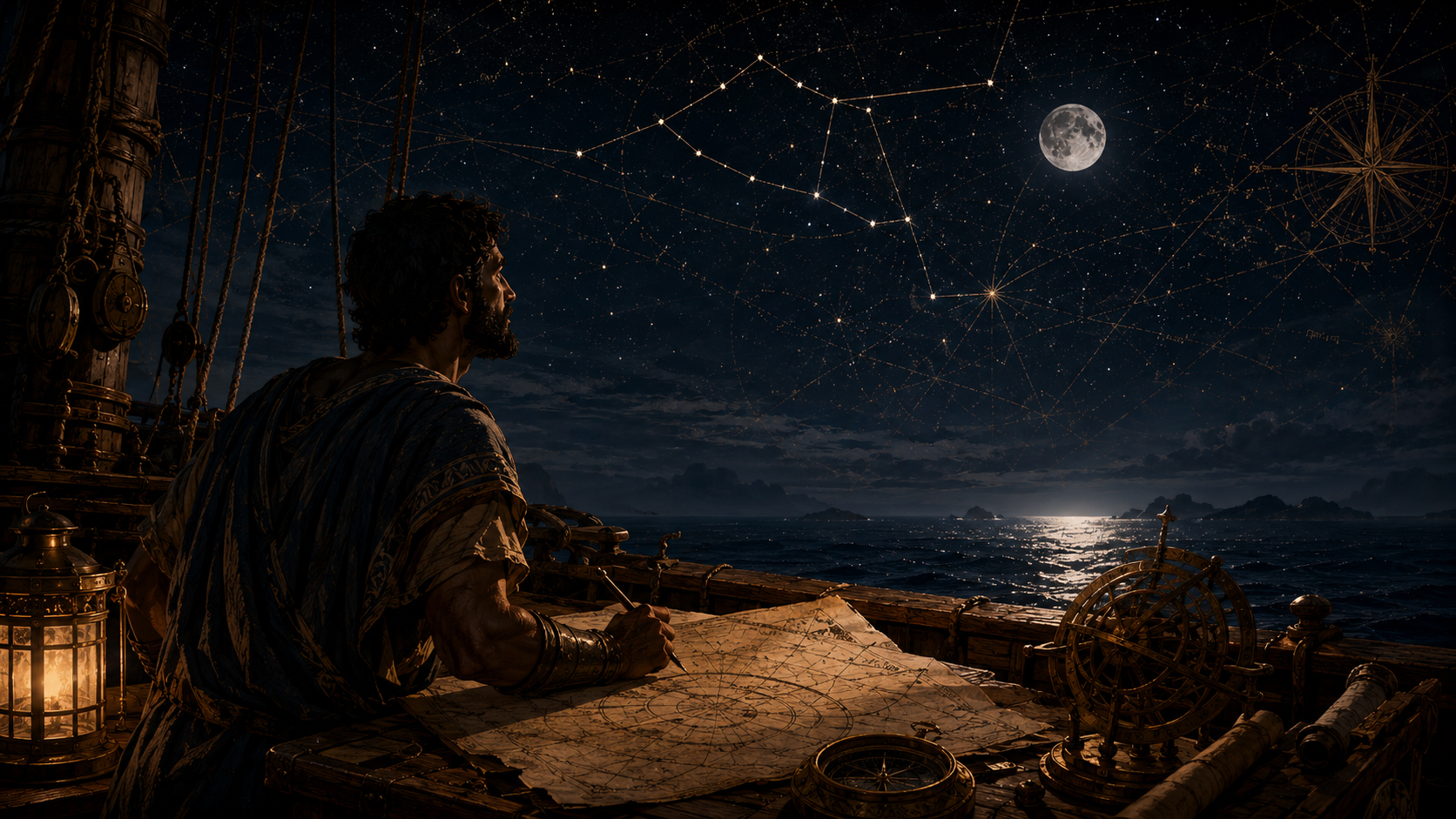
Celestial Navigation
Stars helped sailors hold direction, estimate latitude, track seasons,
and orient themselves when land disappeared. Familiar constellations
acted like a night map, though the map was moving and the ocean was not
especially sympathetic.
Sun
The Sun’s Path
The rising and setting sun gave direction, time awareness, and seasonal
clues. Sailors watched its arc, shadows, heat, and position to understand
where they were going and how the day was changing around them.
Moon
Moon and Tides
The moon mattered because tides mattered. Coastal sailors studied tidal
changes, currents, exposed rocks, harbor access, and timing. A wrong tide
could turn a safe landing into a public embarrassment with barnacles.
Wind
Prevailing Winds
Repeated wind patterns helped sailors plan routes and seasons. In some
regions, especially monsoon-influenced trade networks, knowing when winds
shifted could decide whether a voyage was practical or foolish.
Waves
Swell Patterns
Ocean swells can carry information across long distances. Skilled sailors
observed wave direction, rhythm, reflection, and interference. In some
traditions, reading swells was as important as reading the stars.
Birds
Birds and Wildlife
Birds could hint at nearby land, fishing grounds, seasonal movement,
and coastal proximity. A sailor who ignored birds was ignoring little
feathered weather reports with opinions.
Clouds
Clouds Over Land
Clouds sometimes formed or gathered differently over islands and coastlines.
Sailors watched cloud shapes, colors, shadows, and repeated patterns as
possible signs that land was beyond the horizon.
Water
Color, Smell, and Depth
Changes in water color, floating plants, sediment, smell, temperature,
and depth could suggest shoals, reefs, river mouths, or land nearby.
The sea left clues for people patient enough to notice.
Coasts
Coastal Piloting
Many ancient voyages stayed close enough to land to use headlands,
mountains, beaches, rivers, stars, and known harbors as references.
The coastline became a long, dangerous, irregular road.