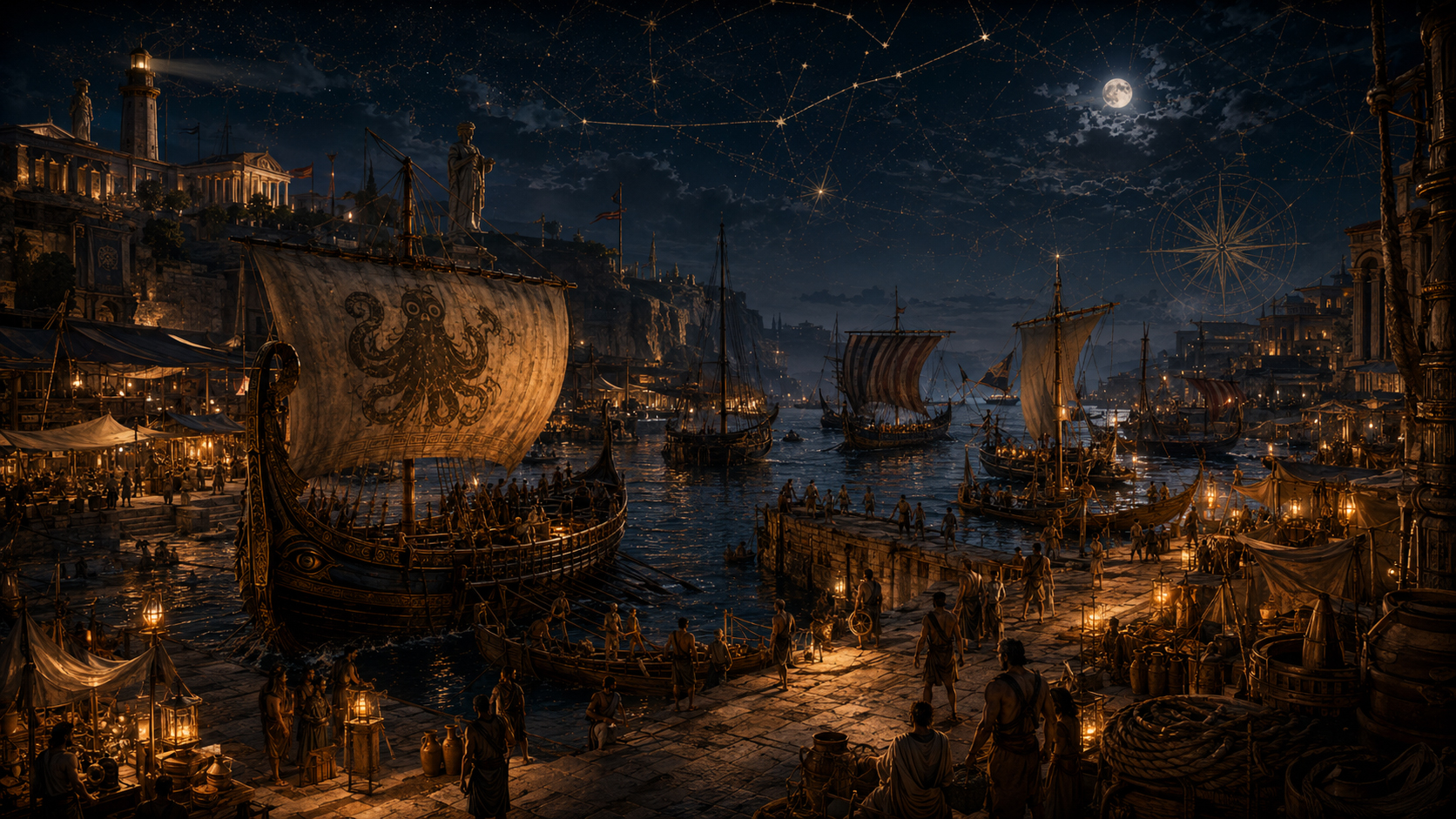
Ship types
Ancient vessels by purpose.
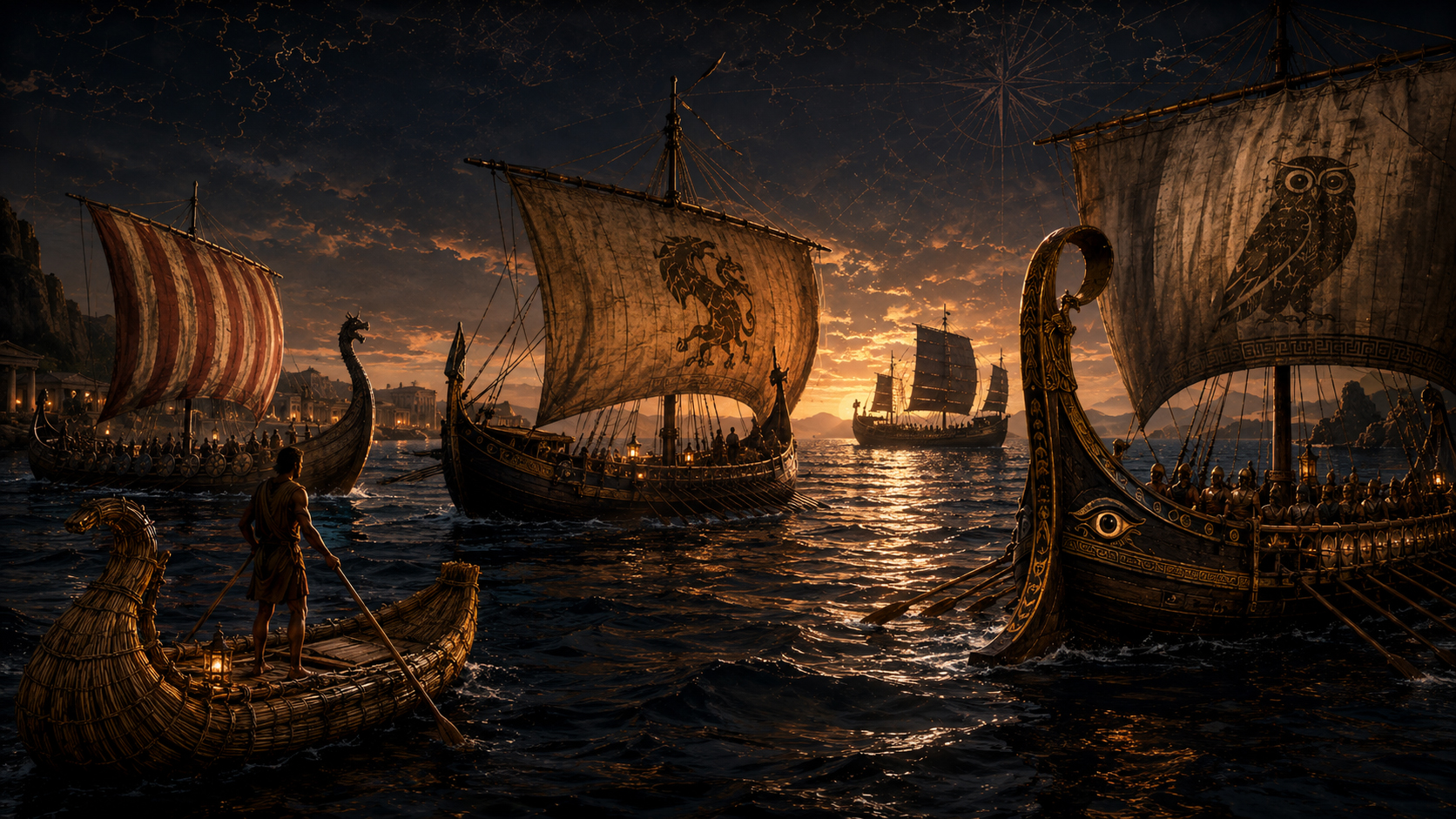
Different waters created different ships. A river boat, a war galley,
and an ocean trader were answers to completely different problems.
River craft
Reed Boats
Reed boats were among the oldest practical vessels. They were light,
buoyant, and well suited to rivers, marshes, lakes, and protected waters.
They prove that early sailors did not need metal engines or grand shipyards
to begin changing the world.
Egypt
Nile Boats
Egyptian river boats moved people, stone, grain, officials, priests,
soldiers, and royal ambition up and down the Nile. Some were working
craft. Others were ceremonial vessels linked to power, religion, and the afterlife.
Mediterranean
Phoenician Traders
Phoenician ships helped connect ports across the Mediterranean.
Their vessels carried goods, ideas, alphabets, rumors, luxuries,
and the practical knowledge of long-distance coastal trade.
Warships
Greek Triremes
The trireme was a fast, oared warship built around speed, coordination,
and the violence of the ram. It required disciplined rowers, sharp command,
and the terrifying confidence to turn a ship into a spear.
Rome
Roman Merchant Ships
Roman trade relied on large cargo vessels that moved grain, wine, oil,
pottery, metal, and imperial logistics. These ships were less glamorous
than warships but often more important to daily life.
North Sea
Viking Longships
Longships were shallow-draft, flexible, fast, and dangerous. They could
cross rough seas, enter rivers, beach quickly, and make coastal towns
suddenly reconsider their security plans.
Indian Ocean
Dhows
Dhows became iconic vessels of Indian Ocean trade. Their lateen sails,
practical hulls, and seasonal use of monsoon winds connected Africa,
Arabia, India, and beyond.
East Asia
Chinese Junks
Junks developed into highly capable sailing vessels with features such
as battened sails and compartmentalized hull thinking. They carried
trade, people, and maritime influence across Asian waters.
Pacific
Ocean Canoes
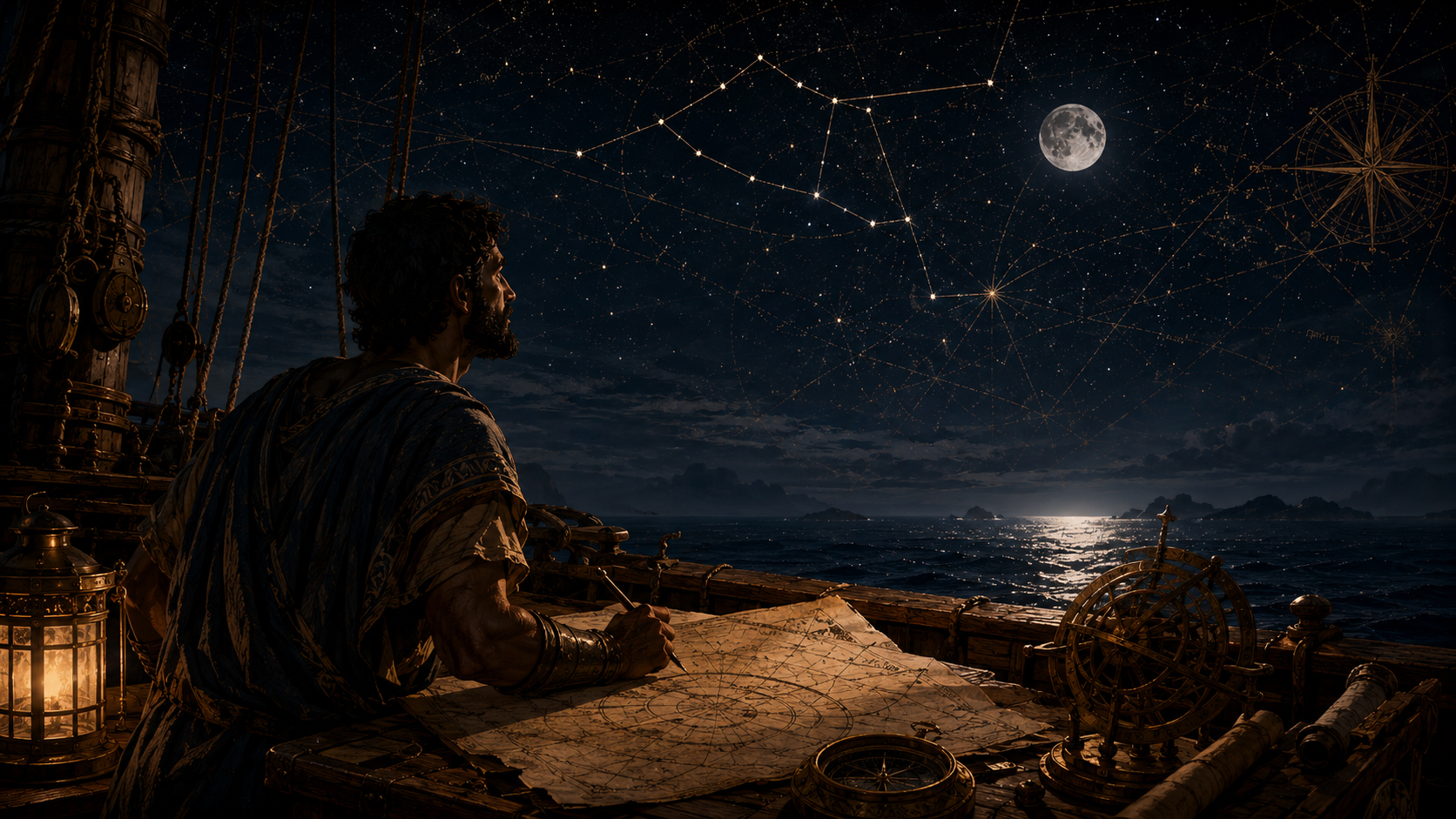
Pacific voyaging canoes were masterpieces of navigation, memory,
seamanship, and design. They crossed huge ocean distances using
stars, swell patterns, birds, wind, and inherited route knowledge.