Sea monsters and myths

The unknown always grows teeth.

Ancient sailors crossed waters they could not fully measure, predict, or explain. When the sea swallowed ships, dragged men below, screamed in storms, or hid land behind fog, stories rose from the dark water: krakens, sirens, sea dragons, ghost ships, cursed islands, and monsters with very specific opinions about sailors.

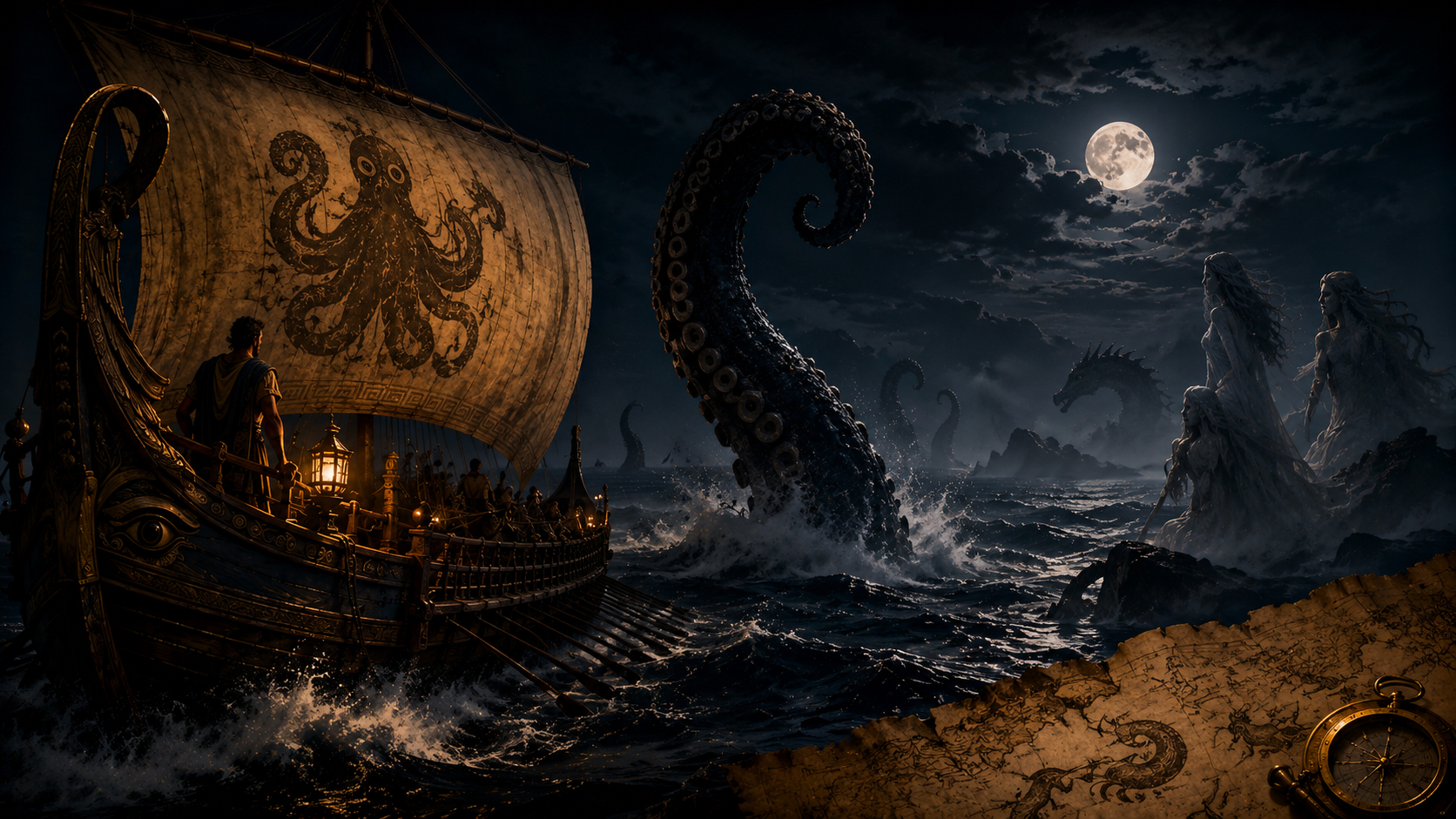
Kraken and mythic sea monsters surrounding an ancient sailing ship under moonlight
Fear with a name

Sea myths were maps of danger.

A monster story was rarely just a monster story. It could warn sailors about reefs, storms, whirlpools, deep water, strange animals, enemy coasts, fog banks, disease, hunger, or the simple terror of being far from shore.

Myths turned uncertainty into characters. A storm became angry. A reef became hungry. A beautiful voice became fatal. A dark shape below the hull became a creature old enough to remember every shipwreck.

AncientSailor rule

When the map says “Here Be Monsters,” check the weather first.

The monster may be a reef, a current, a storm system, a hungry legend, or a captain who refuses to admit he is lost. Fear matters, but good sailors still ask what the fear is pointing toward.

  • Myths can store practical warnings.
  • Fog makes ordinary water supernatural.
  • Bad labels can become bad routes.
  • Storms often sound like judgment.
  • Kraken-sama prefers accurate address labeling.
Monster catalog

Legends from the edge of the map.

These myths come from many traditions and eras. AncientSailor.com treats them as story, symbolism, folklore, and sailor psychology — not biology.

Moonlit ancient ship surrounded by sea monster myths, kraken tentacles, dark waves, and old maps
Deep water

Kraken

The kraken is the great tentacled fear of deep water: a creature large enough to drag ships under and old enough to make sailors whisper before saying its name. In AncientSailor.com, Kraken-sama is terrifying, formal, and offended by inaccurate maps.
Voices

Sirens

Sirens represent the danger of irresistible distraction. Their songs pull sailors away from judgment, duty, and safe passage. The myth asks a practical question: what happens when desire becomes louder than survival?

Serpents

Sea Dragons

Sea dragons and serpents appear in many maritime traditions. They can symbolize storms, waves, unknown animals, dangerous coastlines, or the feeling that the sea itself is alive and watching.

Ghosts

Ghost Ships

A ghost ship is the perfect sailor nightmare: a vessel still moving after its crew is gone. It carries questions no one wants answered. What happened aboard? Why is it still sailing? And why is it coming closer?

Fog

Cursed Fog

Fog erases the world. It hides rocks, enemies, coastlines, stars, and the difference between confidence and stupidity. No wonder sailors gave fog curses, ghosts, voices, and bad intentions.

Islands

Moving Islands

Some legends describe islands that vanish, move, or reveal themselves only to certain sailors. They may echo mirages, whales, volcanic lands, bad charts, wishful thinking, or the ancient truth that not every destination wants visitors.

Whirlpools

Maw of the Sea

Whirlpools and violent currents easily became mouths, gates, or monsters. A sailor watching water twist with enough force to seize a vessel did not need much imagination to call it hungry.

Storms

Storm Spirits

Storm myths gave personality to sudden weather, lightning, black clouds, rogue waves, and broken masts. When the sky attacked, sailors often explained it as anger, judgment, or a debt coming due.

Depths

The Thing Below

Almost every sailor culture has some version of the unseen shape below the boat. Maybe it is a whale. Maybe it is a shadow. Maybe it is the ocean reminding everyone that humans only use the surface.

Manga note

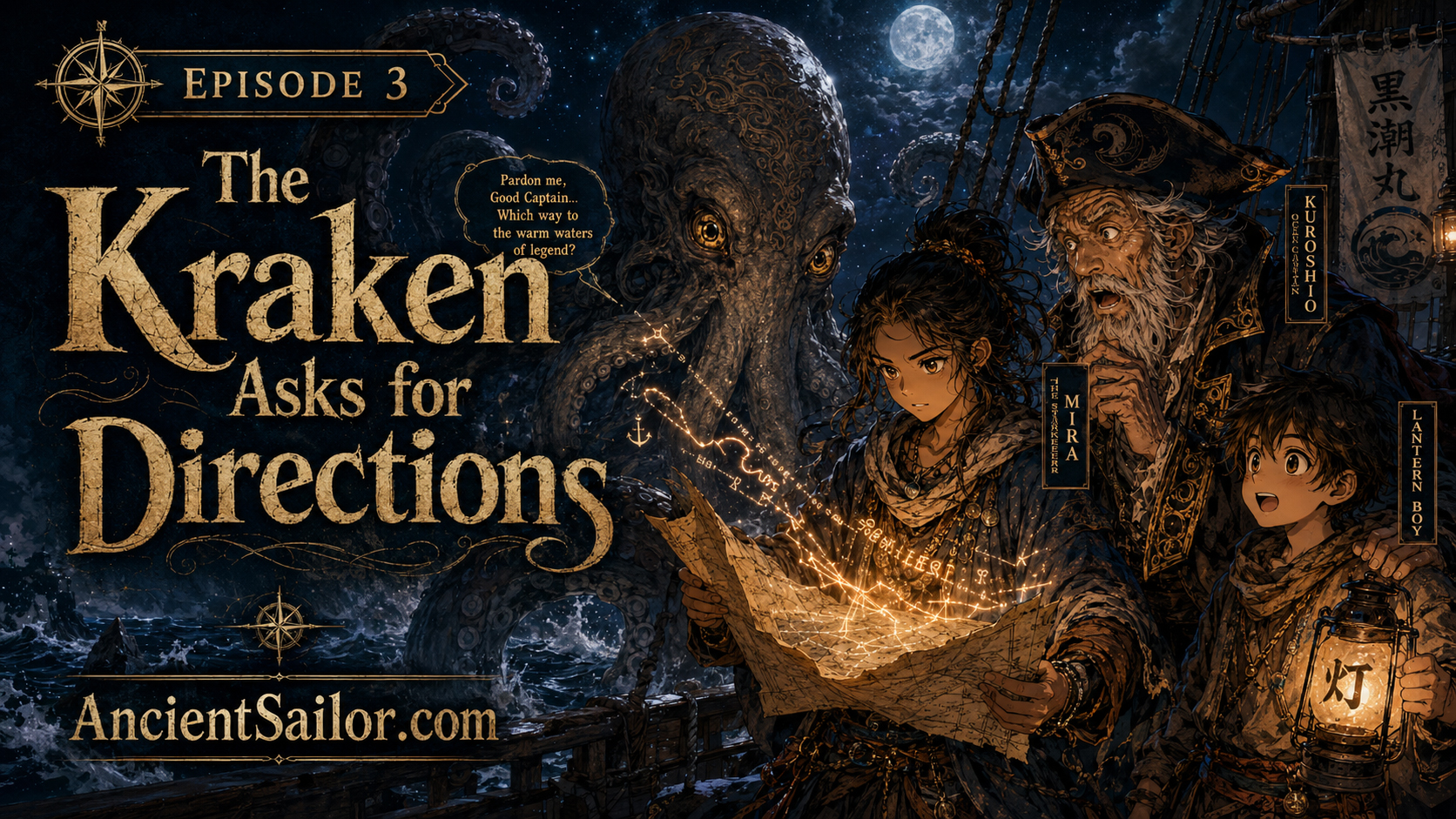
Kraken-sama would like everyone to stop calling him “the problem.”

In Episode 3, the crew panics when a giant tentacle rises beside the ship. Kraken-sama adjusts his spectacles, clears his throat, and asks why the harbor map labels his home as “Unhelpful Whirlpool Area.”

Old Captain Kuroshio immediately claims diplomatic immunity. Mira the Mapkeeper apologizes for the cartography. The Permit Goblin demands a sea monster address verification form before any further screaming may occur.

Why myths survive

Monsters make fear portable.

A good sea myth can travel farther than the ship that first carried it. Stories moved from port to port, changing shape with every retelling.

Warning

Myths as Safety Memory

A monster at a dangerous reef is easy to remember. A cursed current is easier to teach than a lecture on local hydrodynamics. Folklore often stored practical caution inside dramatic clothing.

Psychology

Myths as Fear Management

Naming a fear makes it easier to discuss. A sailor who says “the fog is cursed” may really mean: visibility is bad, the coast is dangerous, and we should stop pretending we are in control.

Identity

Myths as Harbor Culture

Ports collect stories. A harbor with a monster legend has a shared warning, a shared joke, a shared identity, and a useful way to scare reckless young sailors before they become wreckage.

Mystery

Myths as Unknown Science

Strange lights, rare animals, giant squid, rogue waves, earthquakes, volcanic islands, and unusual weather could all become supernatural before anyone had better explanations.

Power

Myths as Moral Judgment

Many sea stories punish arrogance, greed, oath-breaking, cruelty, or disrespect. The ocean becomes a judge, and the sailor becomes a defendant with wet boots.

Story

Myths as Entertainment

Sailors also told stories because stories are useful in the long dark. A good monster makes the night shorter, the tavern louder, and the storyteller more important than he probably deserves.

AncientSailor rule

When the map says “Here Be Monsters,” check the weather first.

The monster may be a reef, a current, a storm system, a hungry legend, or a captain who refuses to admit he is lost.

AncientSailor.com keeps the myths alive without pretending they are marine biology. The goal is to understand what sailors feared, what they observed, what they misunderstood, and what they turned into story.

Kraken-sama politely asking for directions beside an ancient ship
Related reading

Sail beyond the monster fog.

The myths become richer when you know the ships, the navigation methods, and the voyages that disappeared into rumor.

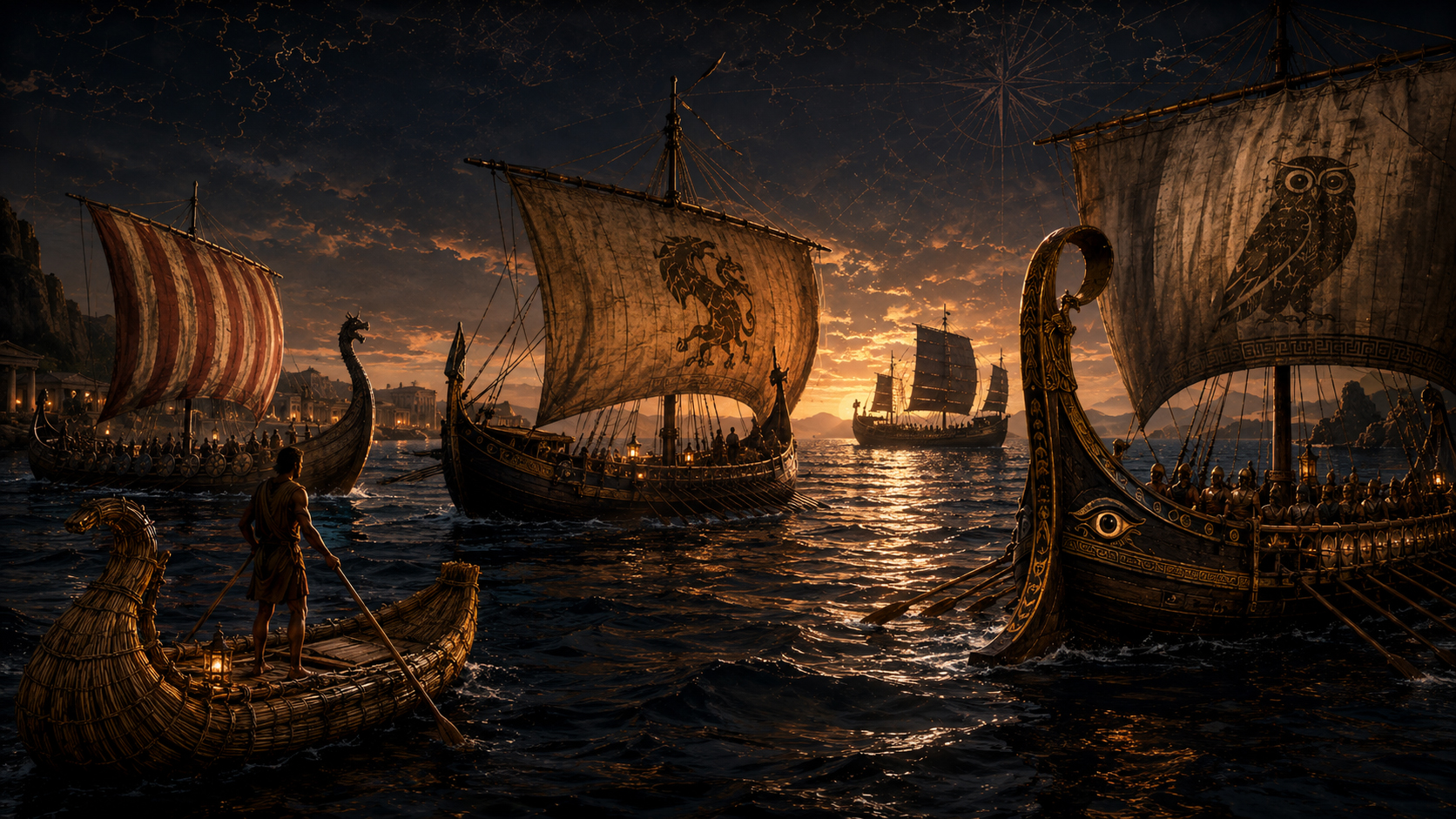
Ancient ships crossing a dark sea under bronze light
Ships

Ancient Ships

The vessels sailors trusted against rivers, coasts, open seas, storms, and monsters.

Board the ships
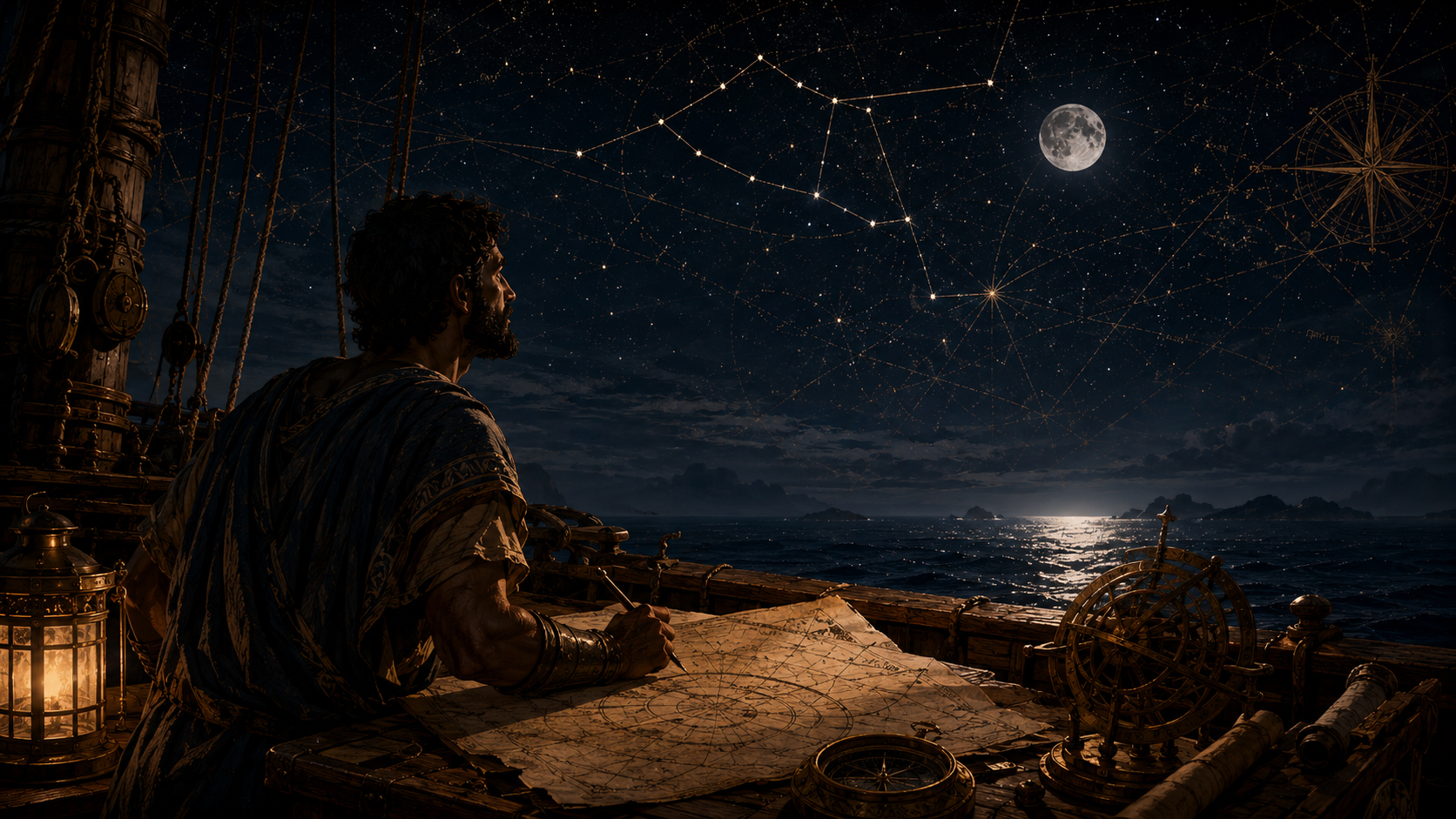
Ancient navigator reading stars from a ship deck at night
Navigation

How Sailors Navigated

Stars, birds, waves, currents, clouds, coastlines, and inherited sea memory.

Read the sky
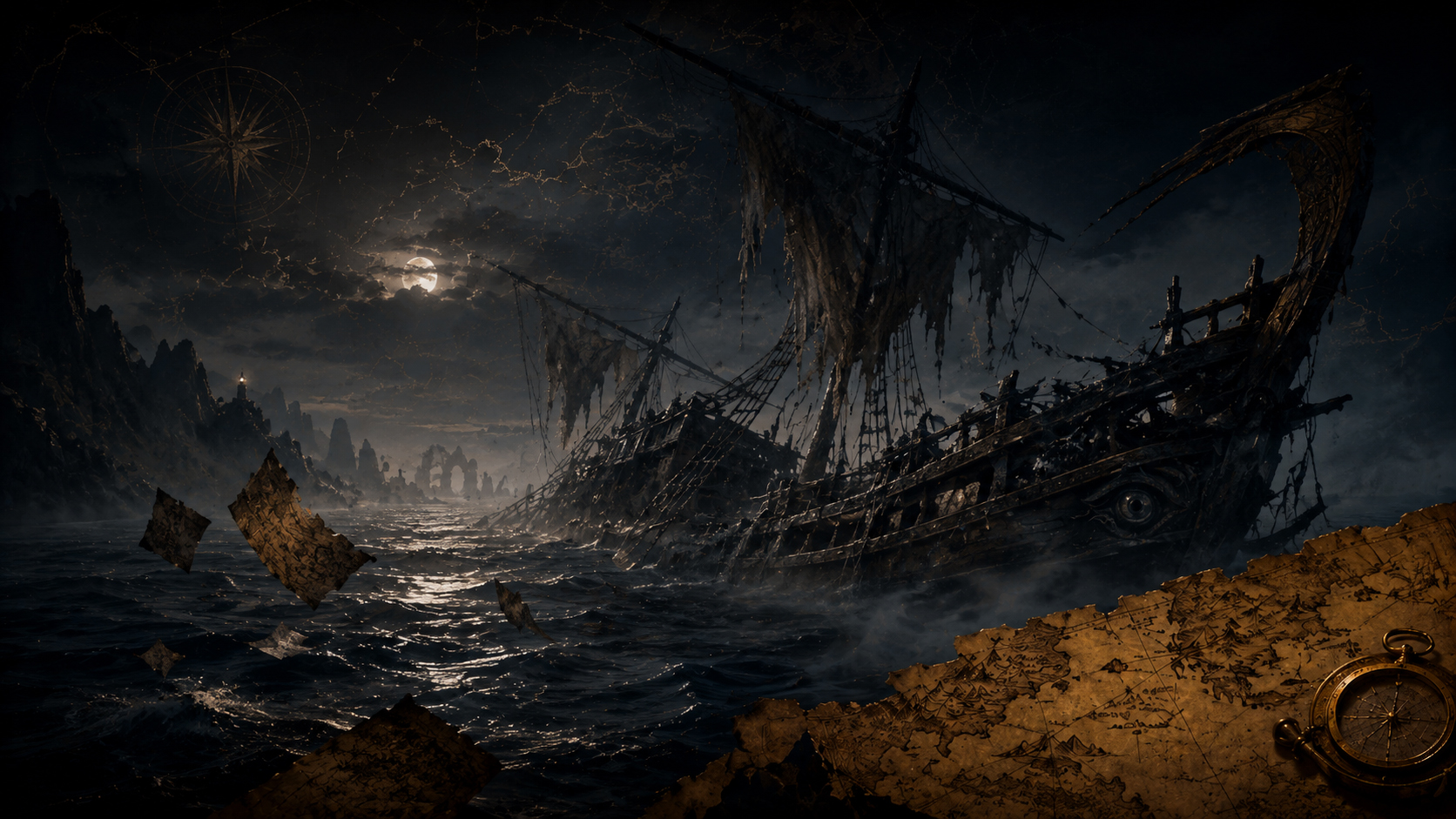
Lost ancient shipwreck and torn map in foggy moonlit water
Voyages

Lost Voyages

Ships that vanished, routes that failed, and the legends left floating behind.

Follow the vanished
History and folklore note

This is myth, folklore, and storytelling.

AncientSailor.com discusses maritime legends, cultural stories, fictional manga-style sea adventures, and historical interpretations of sailor folklore. This page is not a scientific catalog of real marine animals, not a navigation guide, and not a substitute for marine safety training, modern charts, weather forecasting, or professional seamanship.