Episode 5

The Sea Judge of the Ancient Port

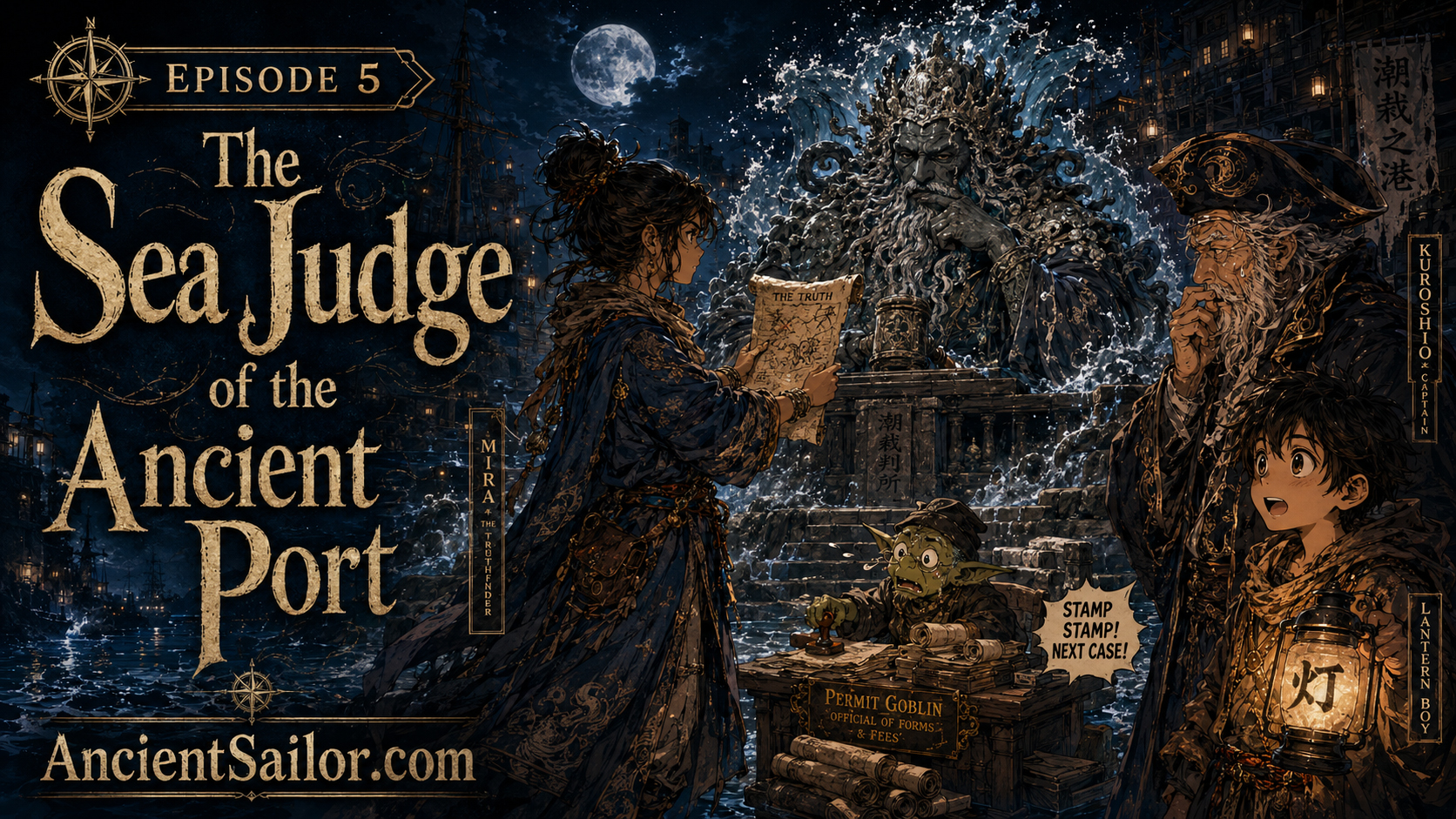
The crew reaches the true ancient port after surviving the false lighthouse. Captain Kuroshio immediately begins improving the story. Then the tide goes out, the courthouse rises from the wet sand, and the Sea Judge calls the harbor to order.

The Sea Judge rises from a low-tide courtroom in an ancient port while Mira, Captain Kuroshio, Lantern Boy, and the Permit Goblin testify
Low tide court

The harbor had docks, markets, taverns, warehouses, and one courtroom that only appeared when sailors lied too loudly.

At high tide, it was just water. At low tide, stone steps rose from the mud, barnacles clicked like clerks, and an old bell rang for testimony.

The Permit Goblin called it “irregular but respected.” Mira called it “useful.” Captain Kuroshio called it “surely closed for the season.”

Episode setup

The court does not punish courage. It punishes edited courage.

Episode 5 turns harbor storytelling into a trial. The danger is not that Captain Kuroshio survived. The danger is that his polished version might become the public warning future sailors rely on.

  • Mira testifies with evidence.
  • The map shows the unedited record.
  • Lantern Boy gives the cleanest witness statement.
  • The Permit Goblin’s paperwork becomes useful.
  • The Sea Judge corrects the story before it becomes dangerous.
Manga episode

Scene by scene.

The ancient port opens court, the Sea Judge questions the crew, and Captain Kuroshio discovers that exaggeration is less charming under oath.

Low tide reveals the Sea Judge courtroom beneath the ancient port as sailors and harbor witnesses gather
Panel 1

Arrival at the True Harbor

The real harbor was not beautiful. It was better than beautiful. It was working.

Nets dried on poles. Shipwrights hammered planks. Merchants shouted over cargo scales. Smoke rose from cook fires. A crooked beacon leaned over the quay with the honest exhaustion of something that had saved lives for centuries.

Lantern Boy smiled. “It smells like fish, rope, and soup.”

Mira nodded. “That is how you know it is real.”

Panel 2

The Captain Improves the Story

Before the anchor was properly set, Captain Kuroshio was already standing on a crate, addressing three dock workers, two fishmongers, and one skeptical goat.

“The false lighthouse tried to deceive us,” he declared, “but I, with a single glance, exposed its treachery.”

The whispering map rustled from Mira’s satchel.

“He screamed at a kelp shadow.”

Panel 3

The Bell Below the Water

A bell rang from beneath the harbor.

Not from a tower. Not from a ship. From below the tide line.

The dock workers stopped talking. The fishmongers covered their baskets. The goat left immediately, suggesting legal experience.

The Permit Goblin went pale green.

“Low tide court.”

Captain Kuroshio stepped down from the crate.

“How long does low tide last?”

Panel 4

The Court Appears

The water withdrew from the inner basin.

Stone steps emerged first, slick with weed. Then pillars. Then a bench carved from black rock, crusted with shells and old verdicts.

Crabs arranged themselves in rows.

Barnacles clicked.

The Sea Judge rose behind the bench, robed in tidewater and gray foam.

“Court is in session.”

Panel 5

The Charge

The Sea Judge opened a ledger made of driftwood.

“Matter before the court: public exaggeration, reckless revision, failure to credit navigator, unauthorized heroism, and one count of insulting weather after survival.”

Captain Kuroshio raised a finger.

“Respectfully, Your Tide, I object to the word unauthorized.”

The Sea Judge looked up.

“Noted. Objection drowned.”

Panel 6

Mira Testifies

Mira stepped forward with the map.

“The false lighthouse appeared west of the true channel. We verified the danger using soundings, current, wave noise, lack of harbor signs, and Kraken-sama’s warning.”

The Sea Judge nodded.

“Precise. Useful. Boring in the correct way.”

Captain Kuroshio whispered, “I also had instincts.”

The map whispered, “His instincts were westbound.”

Panel 7

The Map Takes the Stand

The Sea Judge turned to the chart.

“Map, state your record.”

The map unfolded itself across the witness stone.

Ink rose from the paper in tiny animated scenes: the storm, the wave, Kraken-sama’s complaint, the false lighthouse, Captain Kuroshio pointing the wrong direction, and Mira turning the helm.

The harbor gasped.

The captain adjusted his hat lower.

Panel 8

Lantern Boy Explains Snacks

Lantern Boy was called next.

“What did you observe?”

He stood very straight.

“The storm was rude, the kraken was polite, the false harbor was fake, Mira listened best, the captain helped with a bucket after the wave corrected him, and we are almost out of rice cakes.”

The Sea Judge wrote carefully.

“Supply concern entered into record.”

Panel 9

The Permit Goblin Produces Evidence

The Permit Goblin dragged a wet stack of forms to the bench.

“I submit emergency rope accounting, unauthorized atmospheric entity notes, sea monster correspondence, suspicious municipality stamp, and one incomplete snack inventory.”

The Sea Judge examined the forms.

“Your paperwork is excessive.”

The goblin bowed.

“Thank you, Your Tide.”

Panel 10

The Captain’s Defense

Captain Kuroshio stepped forward with dignity assembled from damaged pieces.

“I concede that certain decorative elements of my story may have expanded in the humid harbor air.”

The Sea Judge waited.

“And perhaps Mira’s role was... substantial.”

The map snapped.

“Essential.”

Kuroshio sighed.

“Essential.”

Panel 11

The Verdict

The Sea Judge struck the bench with a gavel made of coral.

“Captain Kuroshio is found guilty of heroic inflation, selective memory, and misuse of crate-based public speaking.”

The harbor murmured approval.

“Sentence: one public correction, two days assisting ship repairs, and full credit to the navigator in all future retellings.”

Captain Kuroshio bowed.

“A generous tide.”

Panel 12

The Last Star Summons Them

As the tide returned, the courthouse sank back beneath the harbor.

Mira opened the map one more time.

A final route appeared: a thin silver line leading out beyond the breakwater, under an evening sky where one star had appeared before all the others.

The map wrote:

To go home, follow the star that does not flatter you.

Lantern Boy looked up.

“That sounds difficult.”

Mira smiled. “Good. It may be true.”
Episode turn

The court does not punish courage. It punishes edited courage.

Captain Kuroshio learns that survival stories matter because they become future warnings. If the story is false, the warning becomes dangerous.

Mira receives public credit. The map records the corrected testimony. The tide returns over the court, and the final route appears under the first evening star.

Character beats

What this episode establishes.

Episode 5 turns harbor culture into a courtroom: stories are not harmless when future sailors rely on them.

Sea Judge

The Tidal Court

The Sea Judge is not cruel. The Sea Judge is correction. He appears when exaggeration threatens to become public record.

Mira

The Credited Navigator

Mira’s careful work is finally recognized. Her value is not drama. Her value is accuracy under pressure.

Kuroshio

The Corrected Captain

Captain Kuroshio remains brave and ridiculous, but he is forced to admit that truth is part of seamanship.

Lantern Boy

The Honest Witness

Lantern Boy gives the cleanest testimony because he has not yet learned to polish facts into reputation.

Goblin

The Evidence Clerk

The Permit Goblin’s paperwork becomes useful because records matter. Even ridiculous records can preserve truth when memory starts decorating itself.

The Map

The Visual Record

The map proves what happened without anger. It does not shame the captain. It simply refuses to let the false version replace the useful one.

Sea lesson

Harbor stories were navigation tools.

In maritime culture, stories carried warnings: where reefs waited, which channels were safe, what season was dangerous, which lights were reliable, and which captains had confused confidence with skill.

This episode turns exaggeration into a legal problem because bad stories can create bad seamanship. A false tale may make one sailor look brave, but it can make the next sailor less safe.

AncientSailor rule

Tell the version that saves the next crew.

A good sea story can entertain. A better sea story warns. The best one admits who actually read the weather, checked the depth, turned the ship, and bailed the water.

  • Credit the navigator.
  • Name the real hazard.
  • Do not turn mistakes into heroics.
  • Preserve warnings accurately.
  • Let the sea keep you humble.
Next episode

The last star rises before morning.

The crew must leave the ancient port and navigate home under a sky that offers one final guide: a stubborn star that does not care about reputation.

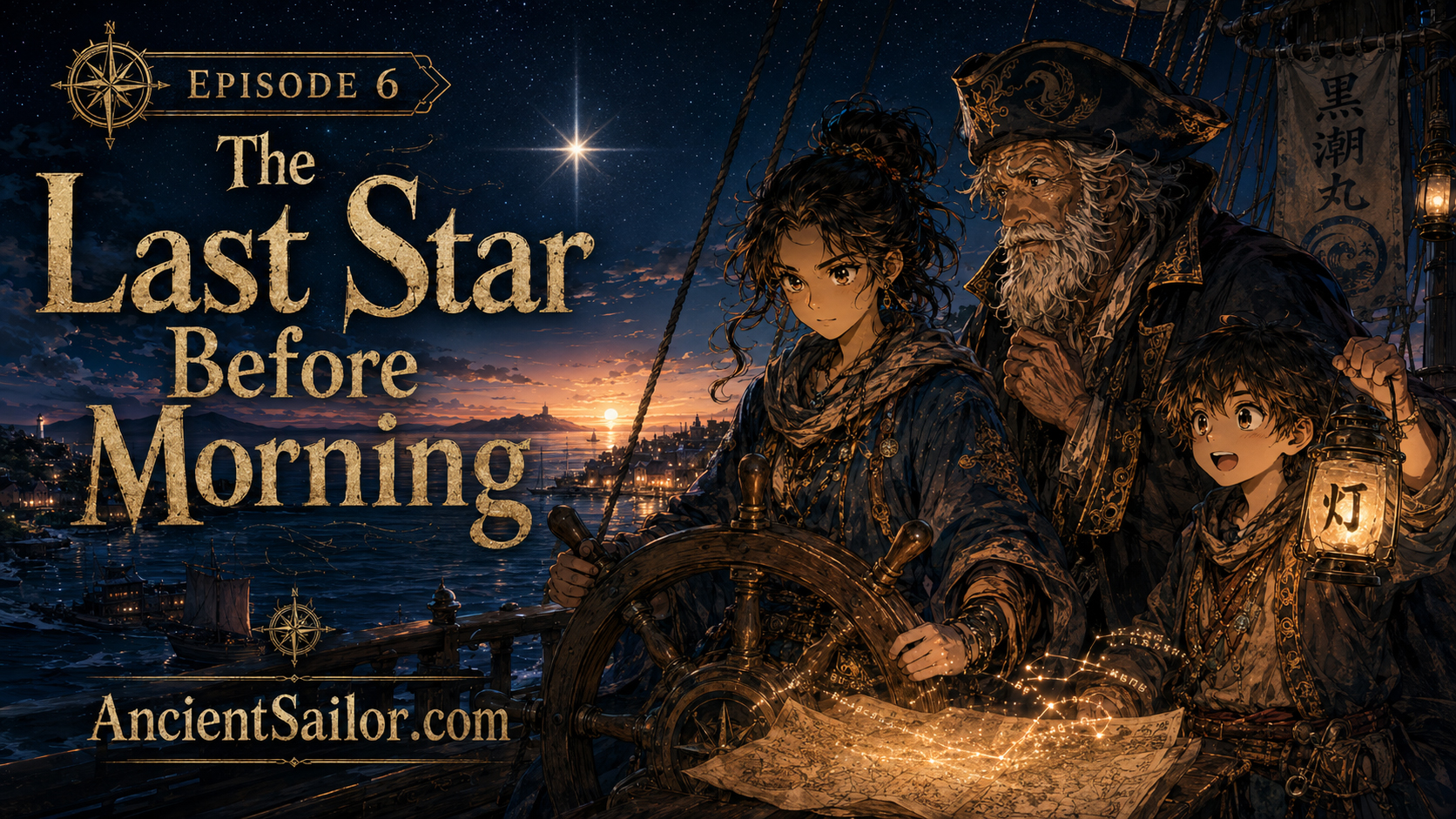
Mira guiding the ancient ship by the last star before morning
6
Next

The Last Star Before Morning

Mira must guide the ship home using one stubborn star, a corrected map, and a captain finally learning to listen.

Read Episode 6
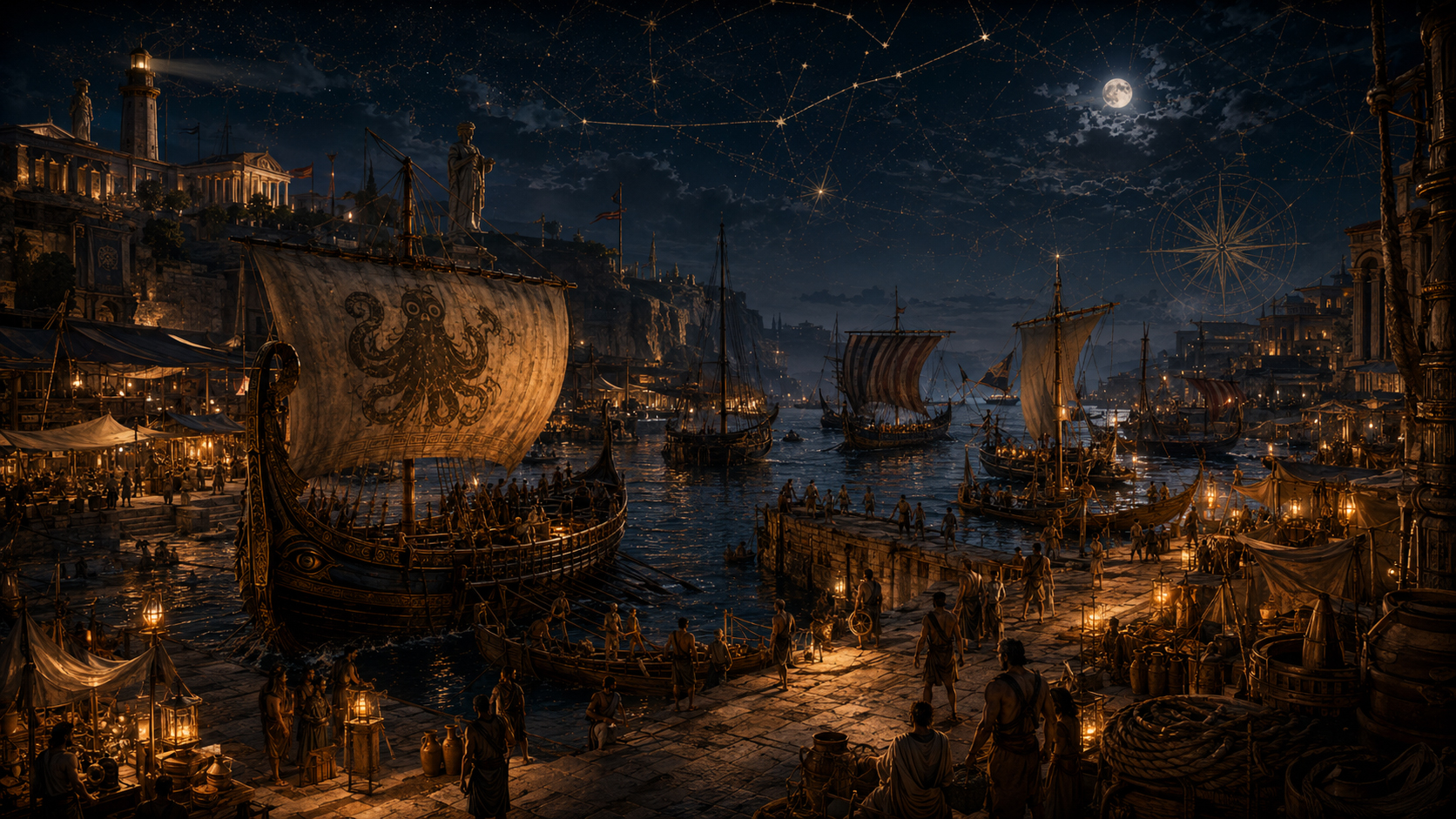
Ancient harbor at night with ships, lanterns, docks, and market stalls
Guide

Ancient Ports

Explore docks, markets, shipyards, customs, taverns, beacons, harbor records, and waterfront trouble.

Enter the harbor
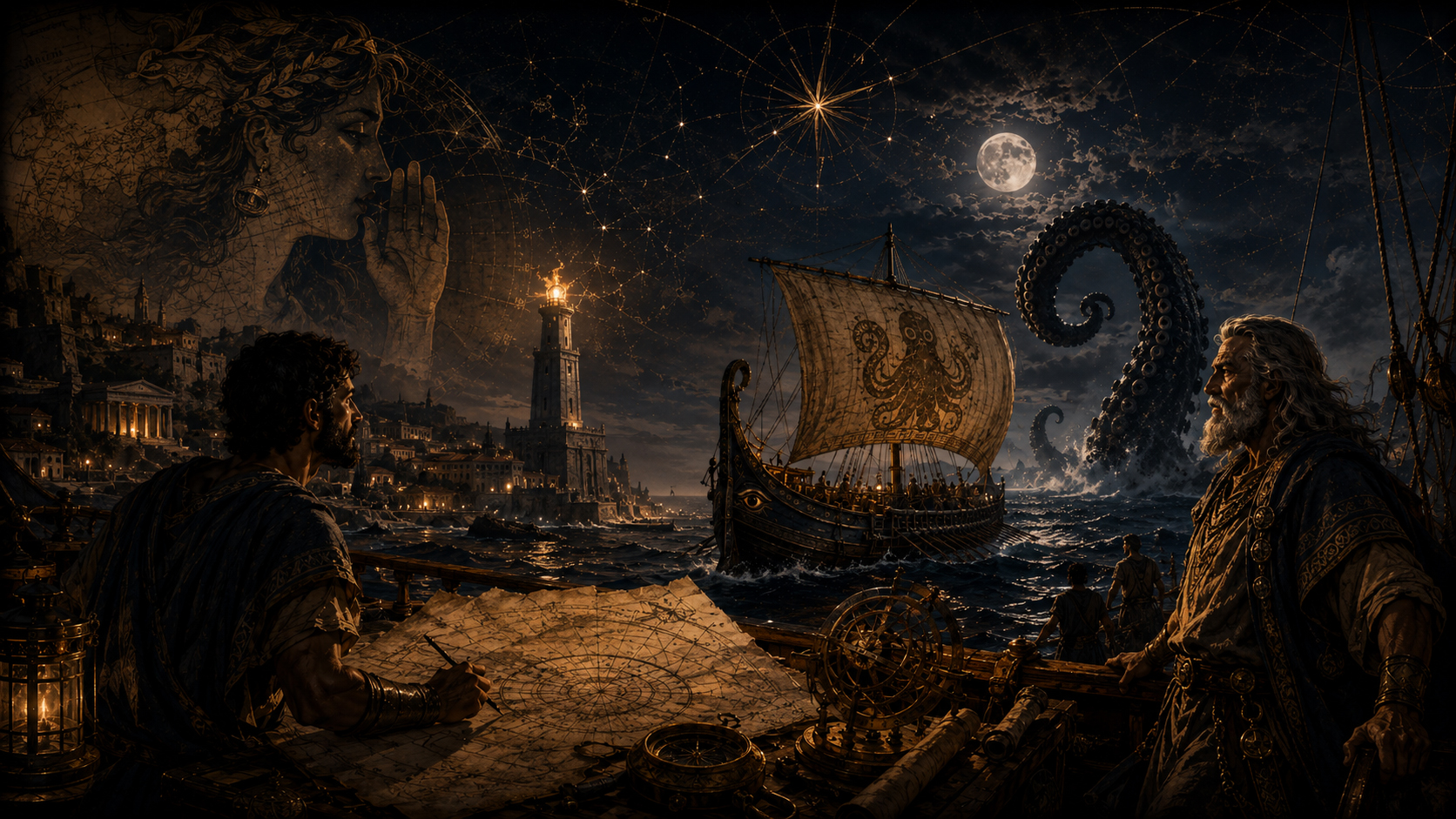
AncientSailor manga crew with ship, lantern, map, moon, and sea monsters
All episodes

Manga Episodes

Return to the full voyage list for maps, storms, krakens, lighthouses, sea judges, and the last star before morning.

View all episodes
Reading note

Fictional story. Real harbor logic.

This episode is a fictional manga-style sea adventure inspired by maritime folklore, ancient port life, harbor records, sailor testimony, navigation memory, and sea culture. It is not legal guidance, boating safety advice, navigation instruction, historical documentation, survival training, or a substitute for modern charts, weather forecasting, emergency equipment, licensed instruction, official forecasts, or professional seamanship.